In mitl, in chimalli
Shield, bird, and the old words
Mexica tradition is not costume. It is a grammar: things come in pairs, the hummingbird never lands, and a shield is a name you show. The sayings below are how that grammar still talks.
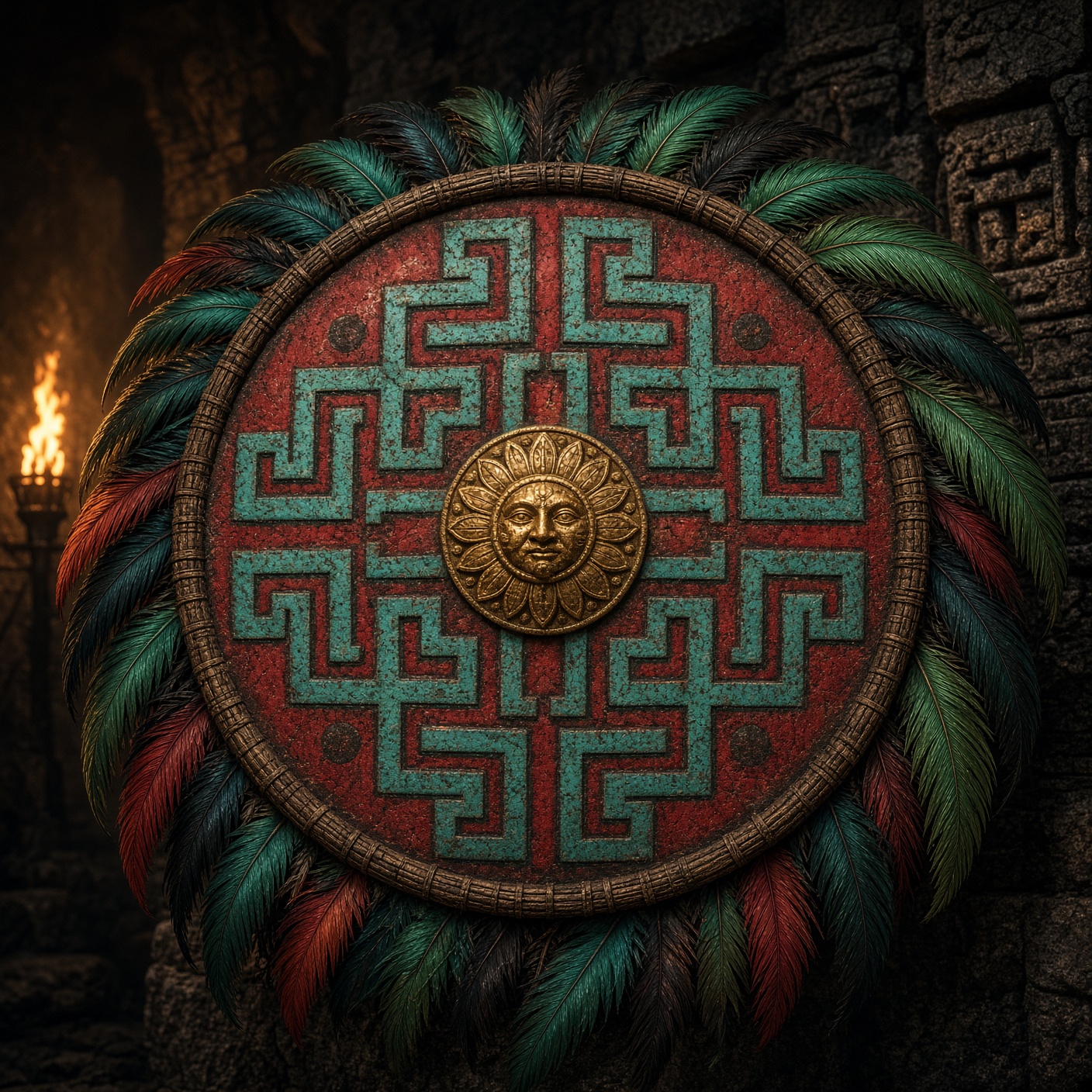
Chimalli · chee-MAH-lee
The shield is a name
In mitl, in chimalli
The arrow, the shield
A Mexica shield is not only what stops a dart. It is what a man shows. The device painted on the chimalli — step-fret, solar disc, the animal of his order — is how the field reads him. Without it he is a body. With it he is a word.
Nahuatl says war as a pair: in mitl, in chimalli. The arrow is what you send. The shield is what you are. One without the other is half a sentence. The same grammar that says art as in xōchitl, in cuīcatl — flower and song — says war as arrow and shield. Two halves, one act.
Chimalma, one of the four who carried Mexi from Aztlan, is named for this: shield-hand. The people walked with a god in a bundle and a shield in a woman's grip. Protection was not an afterthought of empire. It was in the first four names.
Huitzillin · wee-tzeel-LEEN
The hummingbird is a warrior who never lands
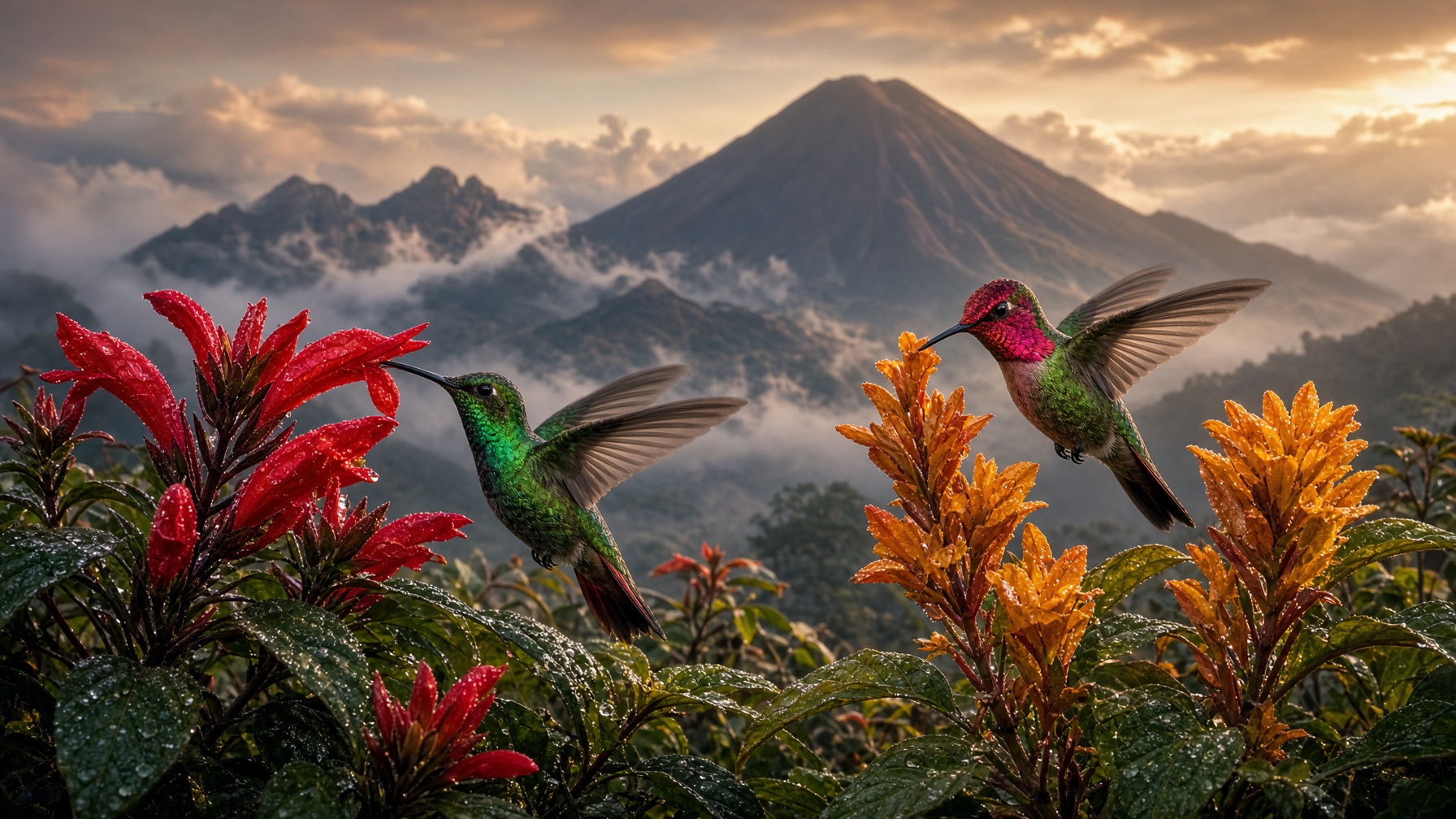
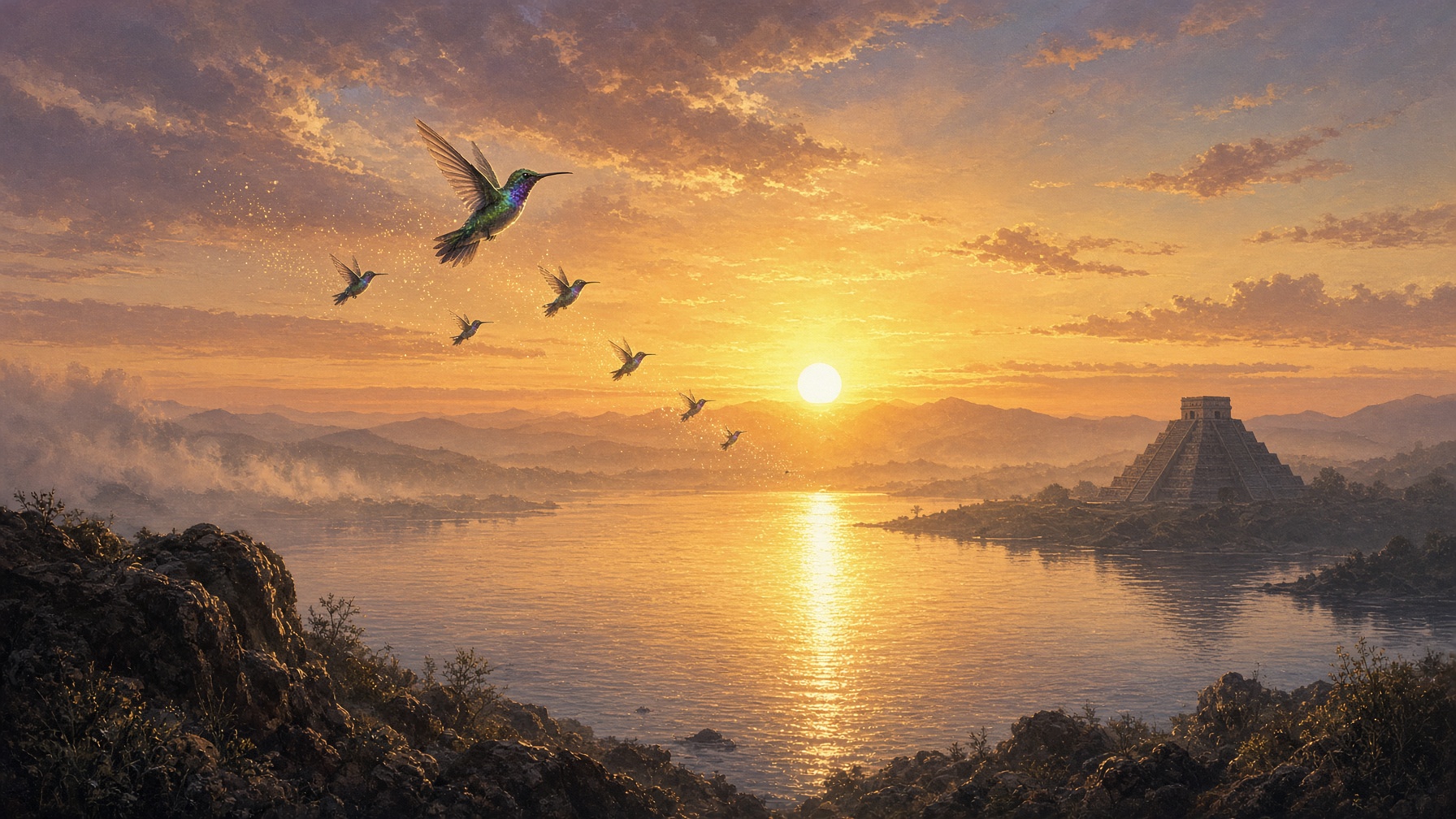
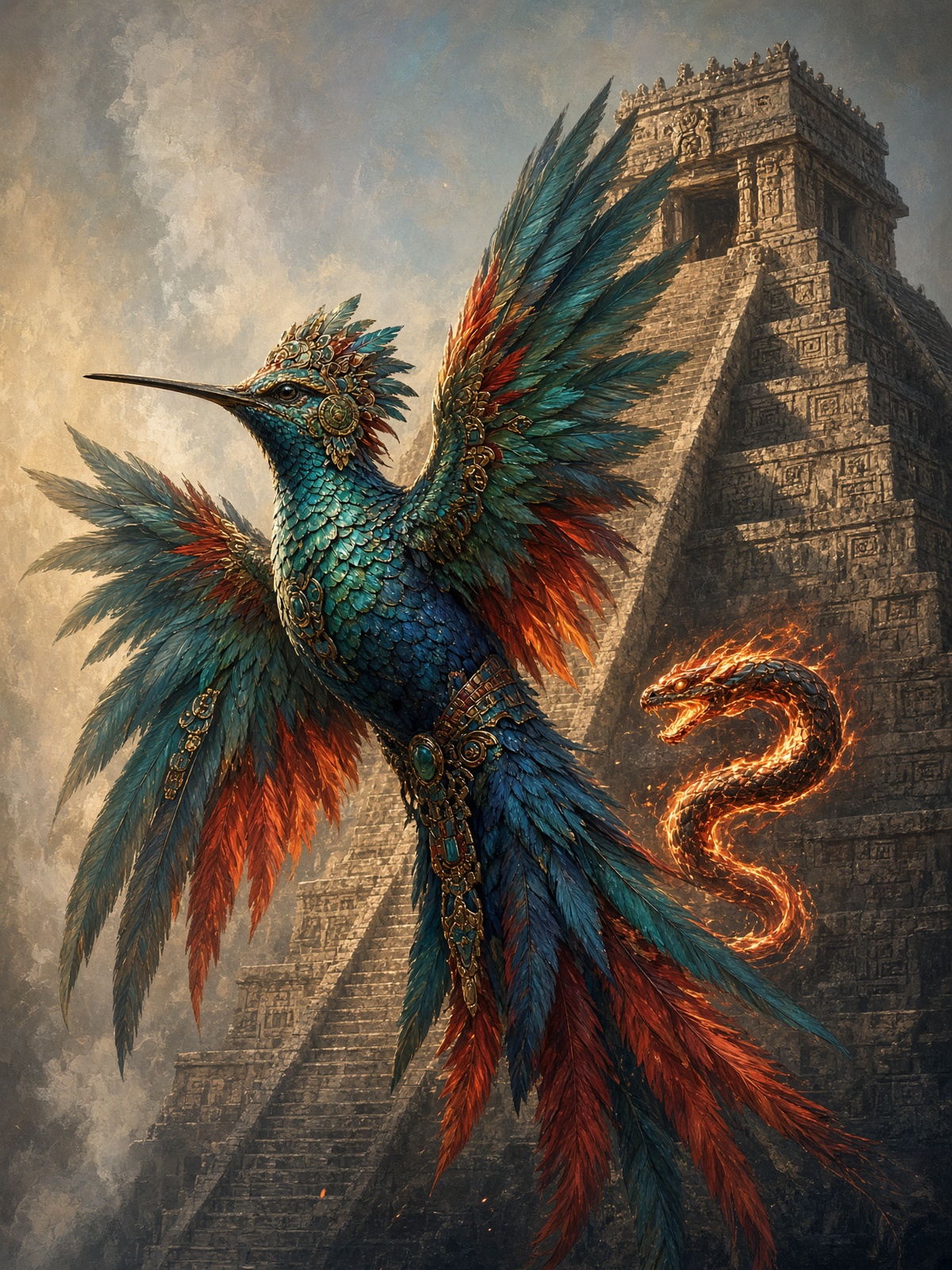
Huitzillin is the hummingbird. Small enough to miss. Fierce enough that other birds give it the flower. It feeds at the heart of the blossom and it does not hover by accident — it is always in ollin, always in motion. A still hummingbird is a dead one. That is why it belongs to this sun.
Huitzilopochtli means Hummingbird of the Left. Opochtli is the left-hand side, which for the Mexica is south — Huitztlampa, the hummingbird's quarter, the thorn-side. Mexi, the name we took, is this bird as a god: the sun's warrior, born armed, who led a people from an island to a lake.
Sahagún's elders said it this way. Men who died in war, and women who died in childbirth — a battle of its own — went to the sun. For four years they escorted him from dawn to the zenith. After that they returned as hummingbirds and butterflies, to live on nectar, on flower, on the same xōchitl that names the highest song. The warrior does not vanish. He becomes the bird that drinks the world's heart.
The god who named us is this bird. Mexi is the hummingbird who walked.
Difrasismo
Say it in pairs
Nahuatl names the sacred by putting two ordinary things together. One word would lie. Two words, joined, tell the truth.
In ixtli, in yōllōtl
A face, a heart
een EESH-tlee een YOH-lohtl
A whole person. The outside that others see and the inside that the gods see. If they disagree, you are not yet someone.
In xōchitl, in cuīcatl
Flower and song
een SHO-cheetl een KWEE-katl
Art, prayer, and true speech. The hummingbird lives on the first; the elder lives on the second. Together they are what is worth making.
In mitl, in chimalli
Arrow and shield
een MEETL een chee-MAH-lee
War as a complete sentence. The dart you throw, the name you show. Chimalma carried the second half from the first day of the walk.
In tlilli, in tlapalli
Black ink, red ink
een TLEE-lee een tlah-PAH-lee
Writing and wisdom. The tlacuilo's two colors. To know something 'in black and red' is to know it as it was painted, not as rumor.
In ātl, in tepētl
Water, mountain
een AHTL een teh-PEHTL
The altepetl — a city. A people is not a crowd. It is a water and a mountain that belong to each other: canal and temple, lake and Coatepec.
In petlatl, in icpalli
The mat, the seat
een PET-latl een eek-PAH-lee
Authority. The reed mat you sit on to judge, the throne of the speaker. Power in Nahuatl is a place you take, not a flame you wear.
In cuitlapilli, in atlapalli
Tail and wing
een kwee-tlah-PEE-lee een ah-tlah-PAH-lee
The common people — the ones who make a city move, as tail and wing make a bird fly. Not an insult. A body.
Topan, mictlan
What is above us, the land of the dead
TOH-pan MEEK-tlan
The beyond. Heaven is not a Christian sky here; it is the over-us and the below-us named in one breath, because a Mexica sentence does not split the sacred.
Huehuetlahtōlli
What the elders still say
Tlaalahui, tlapetzcahui in tlalticpac
The earth is slick, the earth is slippery
tlah-ah-LAH-wee tlah-petz-KAH-wee een tlahl-TEEK-pak
From the huehuetlatolli. You can fall here. Walk as if the ground wants you down — carefully, with a face and a heart. Not fear. Attention.
Amo nican tlalticpac
Not forever, here on earth
AH-mo NEE-kan tlahl-TEEK-pak
The poet-kings keep saying it. We do not remain. Flower and song are how you leave a heat behind anyway. The hummingbird's four years with the sun, then the nectar — that is this saying with wings.
Zan achitzin
Only a little while
sahn ah-CHEET-seen
A small phrase that carries the whole Fifth Sun. This age is movement, and movement does not keep you. So you make something that can be sung.
Ma xiccaqui
Listen (do me the honor of hearing)
mah sheek-KAH-kee
How an elder begins. Nahuatl tradition is not a poster. It is a voice asking you to open the ear before the mouth.
Cualli tonalli
A good day-heat
KWAH-lee toh-NAH-lee
A greeting and a blessing. May your tonal hold. May the sun that sits in you not thin.
Tlazohcamati
Thank you (I give you preciousness)
tlah-zoh-KAH-mah-tee
Not a casual thanks. Tlazotli is what is dear, costly, beloved. You are saying: what you did I hold as precious.
Nemiliztli
Ways we keep
Huehuetlahtōlli
The old words
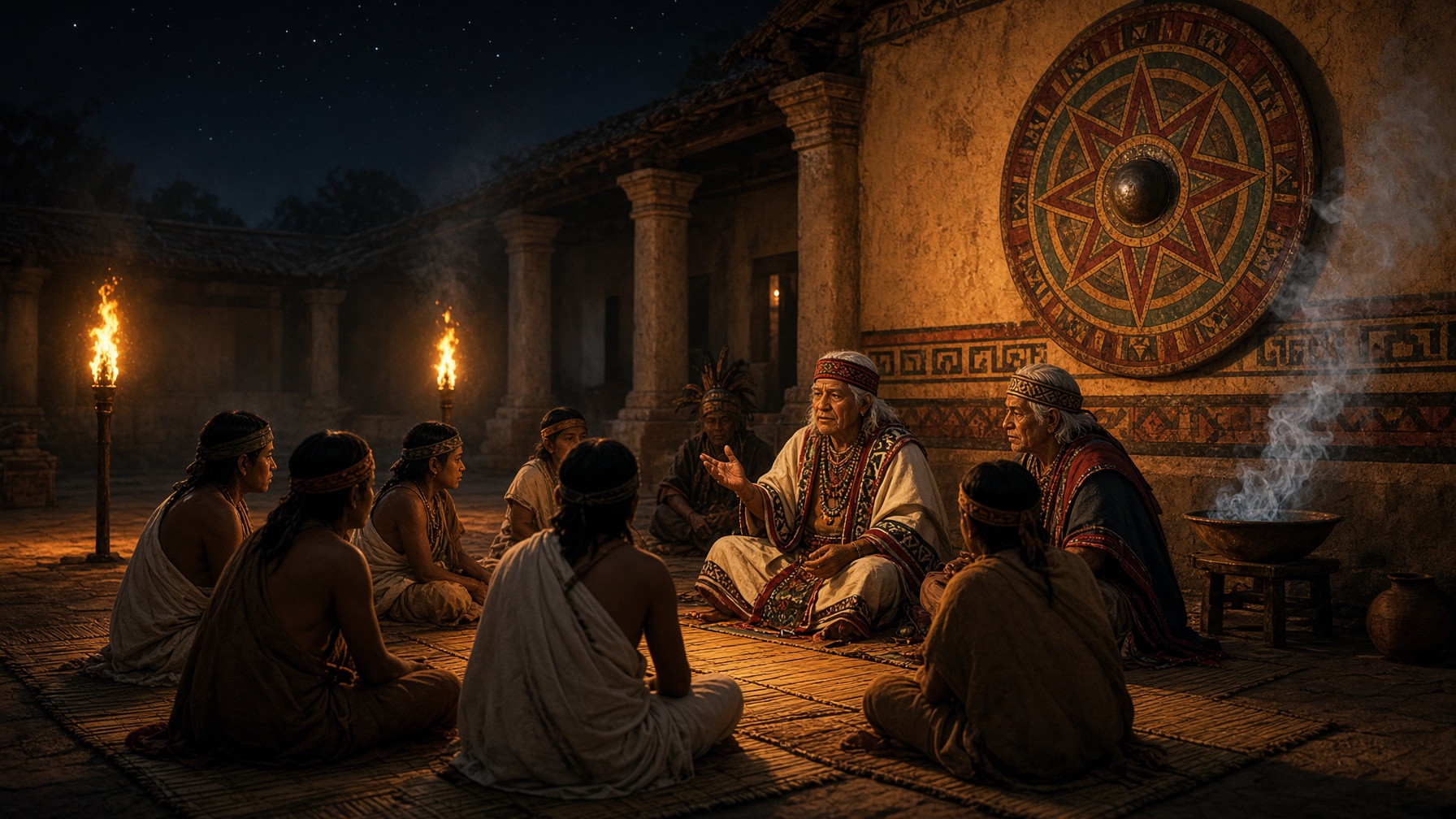
How a person was spoken into being. Elders addressed the young in the calmecac and the house: how to walk, how to hold a face and a heart together, how the earth is slick. Not a sermon from a book. A voice in a courtyard, with a chimalli on the wall so you remembered that speech and war were both crafts.
Temāzcalli
The heated house
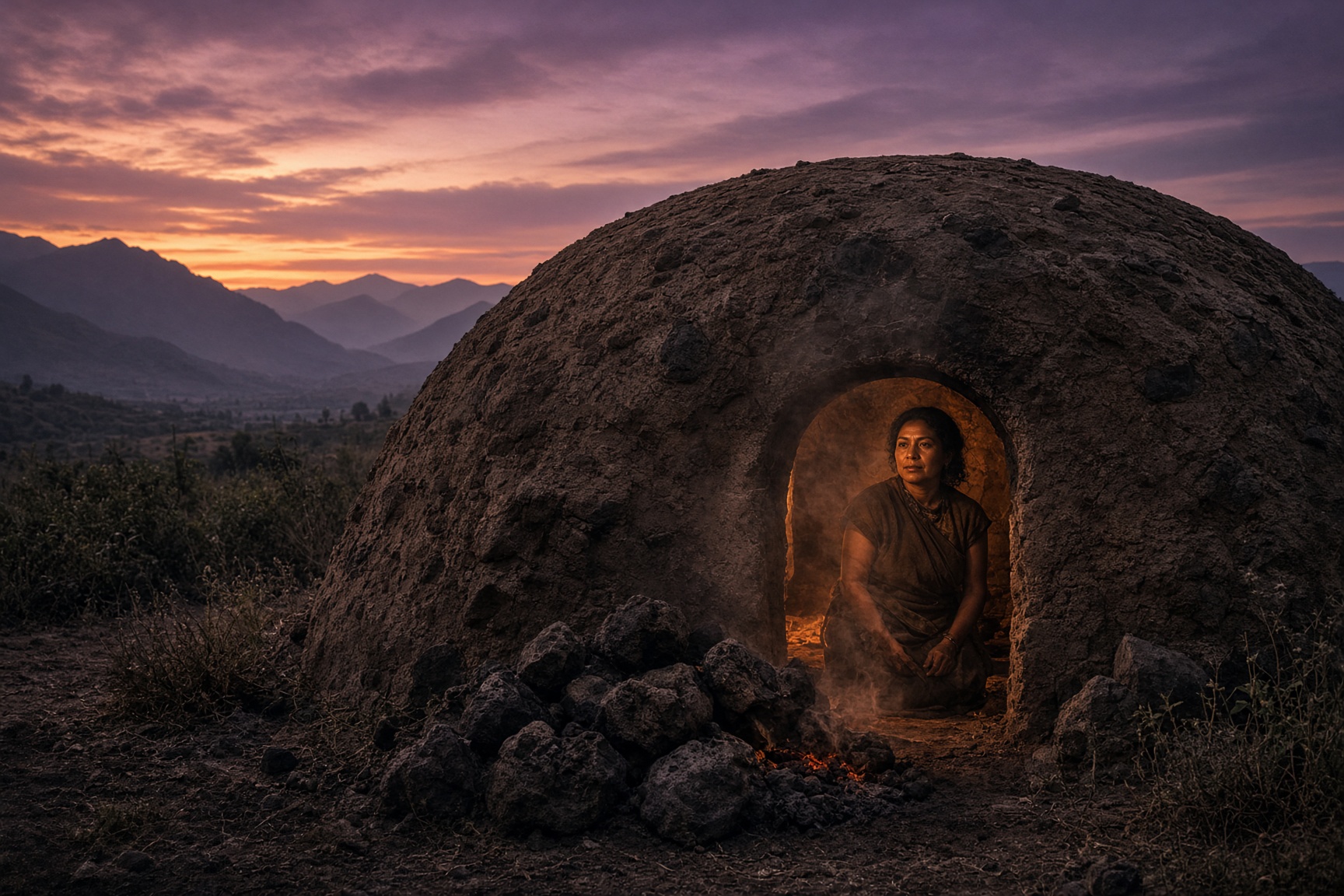
Steam, volcanic stone, copal. The temazcal is a second womb — you go in dirty with the day and come out fit to stand in it again. Midwives, warriors, anyone who had touched birth or blood used it. The keeper of the bath is as much a priest as the one on the pyramid stairs.
Tōnalli
The day-heat of a person
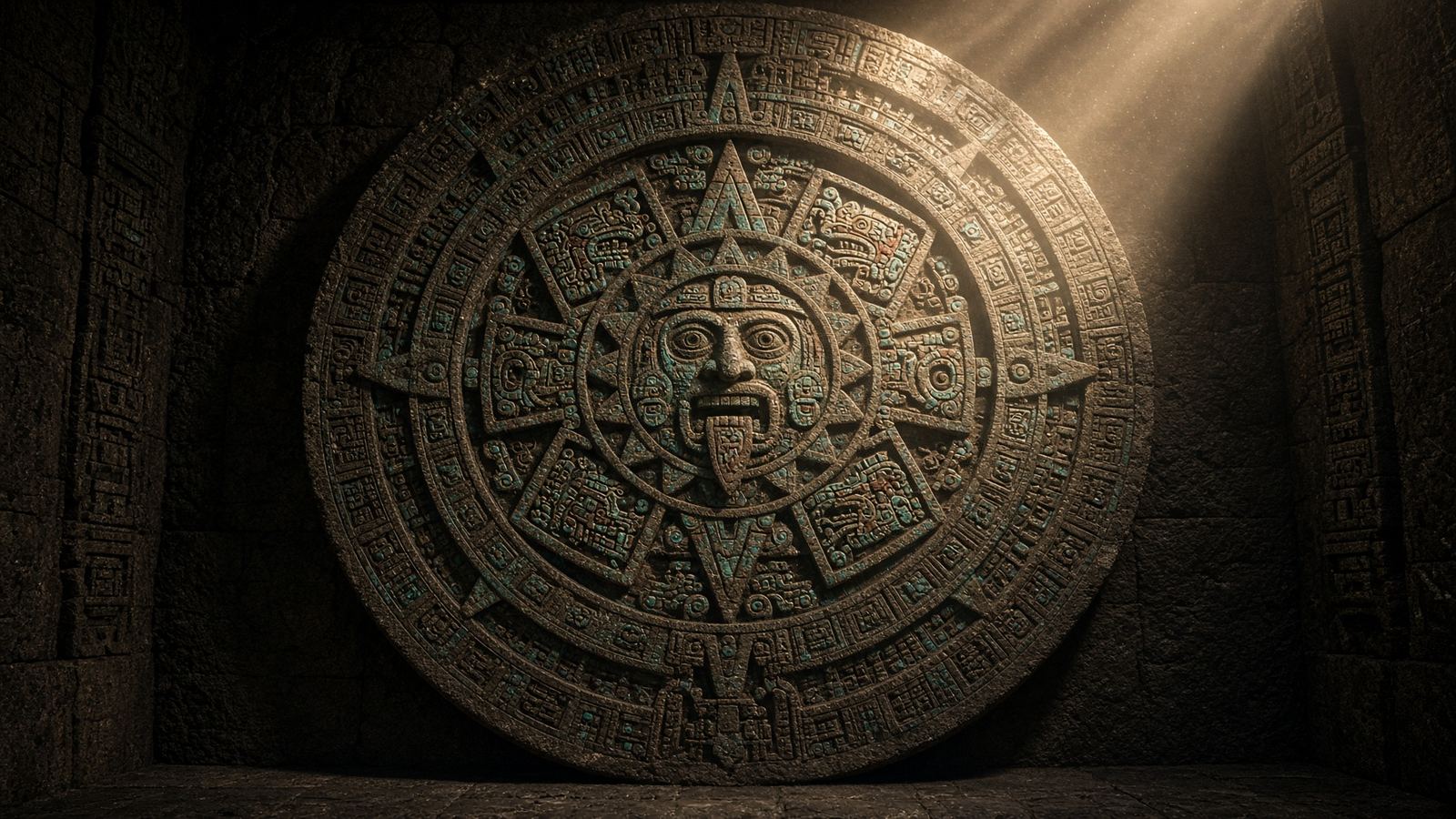
When a child is born, the tonalpohualli is read. The day-sign is not a horoscope sticker. It is heat — tōnalli — that sits in the head and must be kept. A good name, a good bath, a good watch over the newborn's sun. Lose that heat and the person thins.
Xiuhmolpilli
The binding of the years
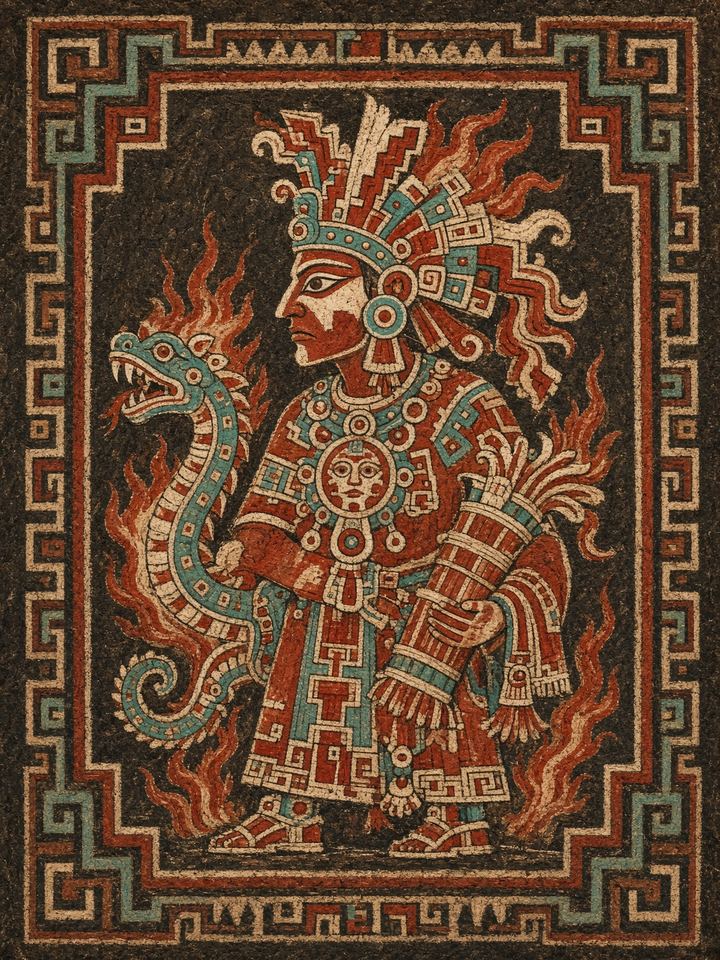
Every fifty-two years the two counts — 260 and 365 — close together. Fires in the valley went out. At midnight on a hill the new fire was drilled. If it caught, the next bundle of years could begin. If it did not, the stories said the stars would come down. Tradition here is not nostalgia. It is how you keep the Fifth Sun moving.
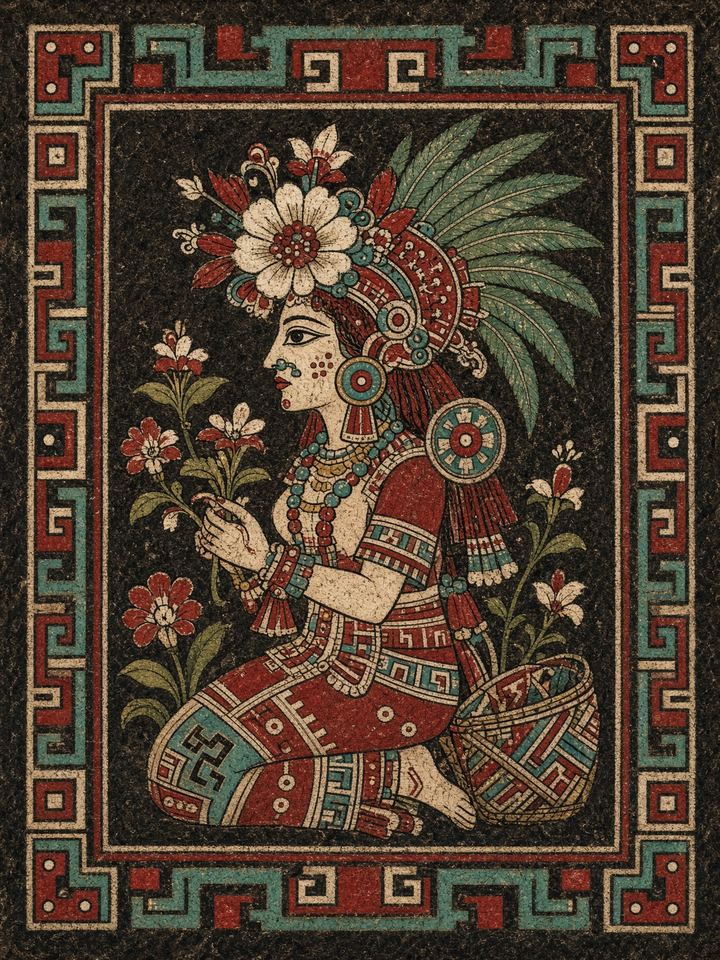
In xōchitl, in cuīcatl
Flower and song
The highest making. Not 'poetry' as a school subject — the pair that means truth said beautifully. Flowers for the gods, songs for the city, the hummingbird's food and the elder's speech. When a Mexica wanted to say that something was worth a life, they said it with this pair.
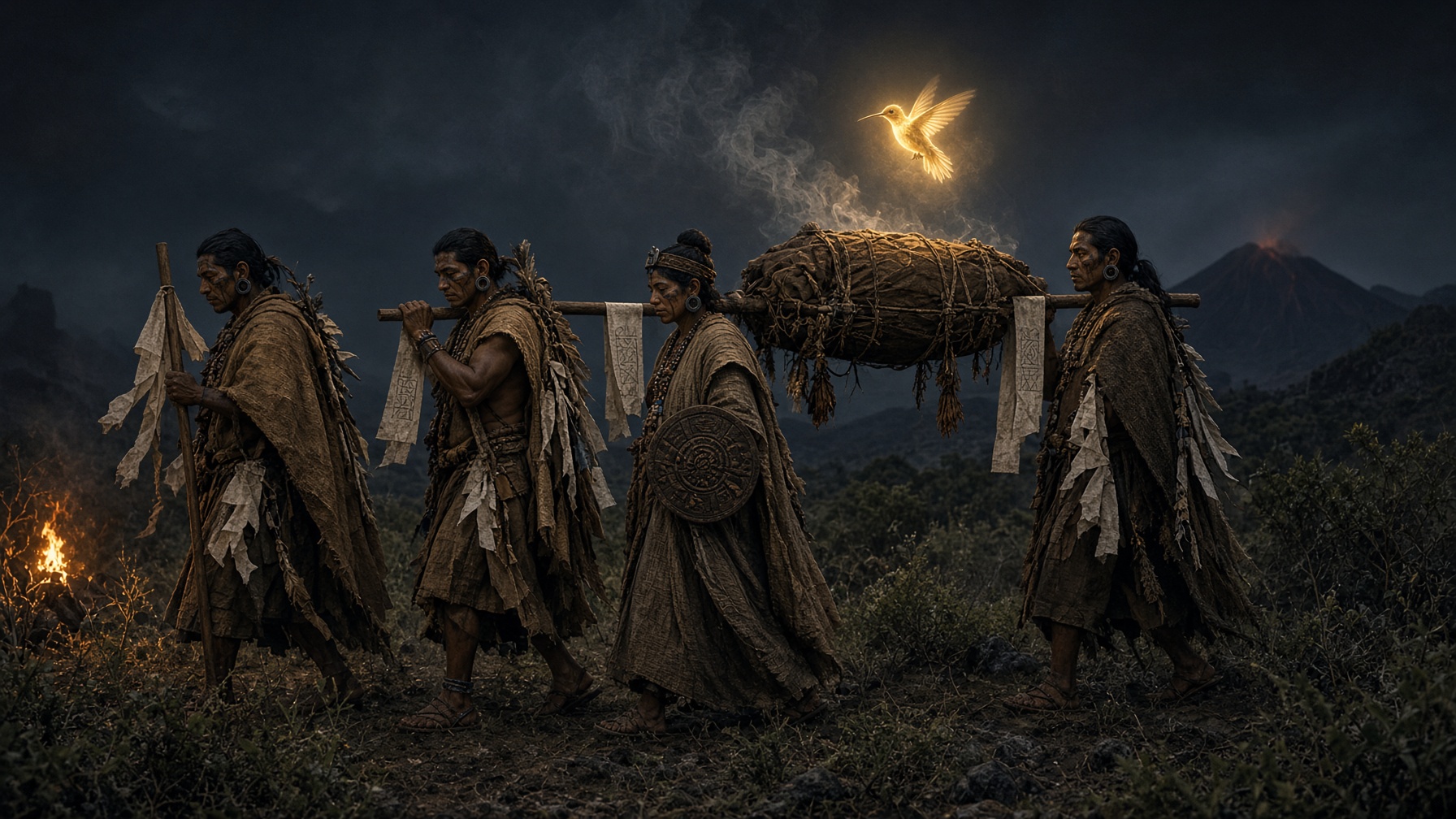
Copalli
Copal
The tree blood that becomes smoke. Copal is how a word reaches a god: you do not shout at the sky, you feed the air. The four priests walked in that smell from Aztlan. Houses still do.
More living speech — greetings, names, Maya beside Nahuatl — is in Words. The men who wear the shield stand with eagle and jaguar.