Aztlan to the lake
How we became Mexica
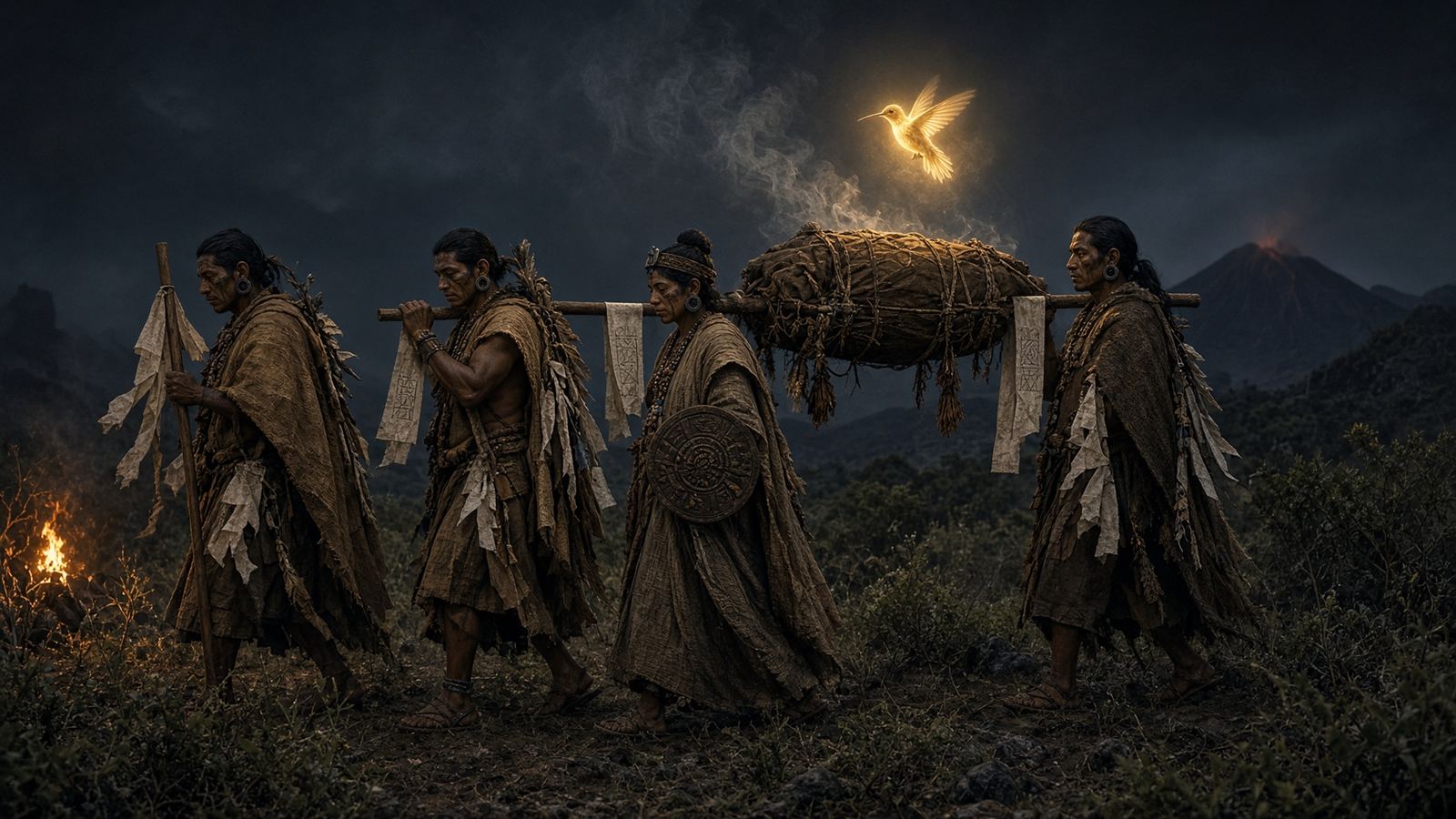
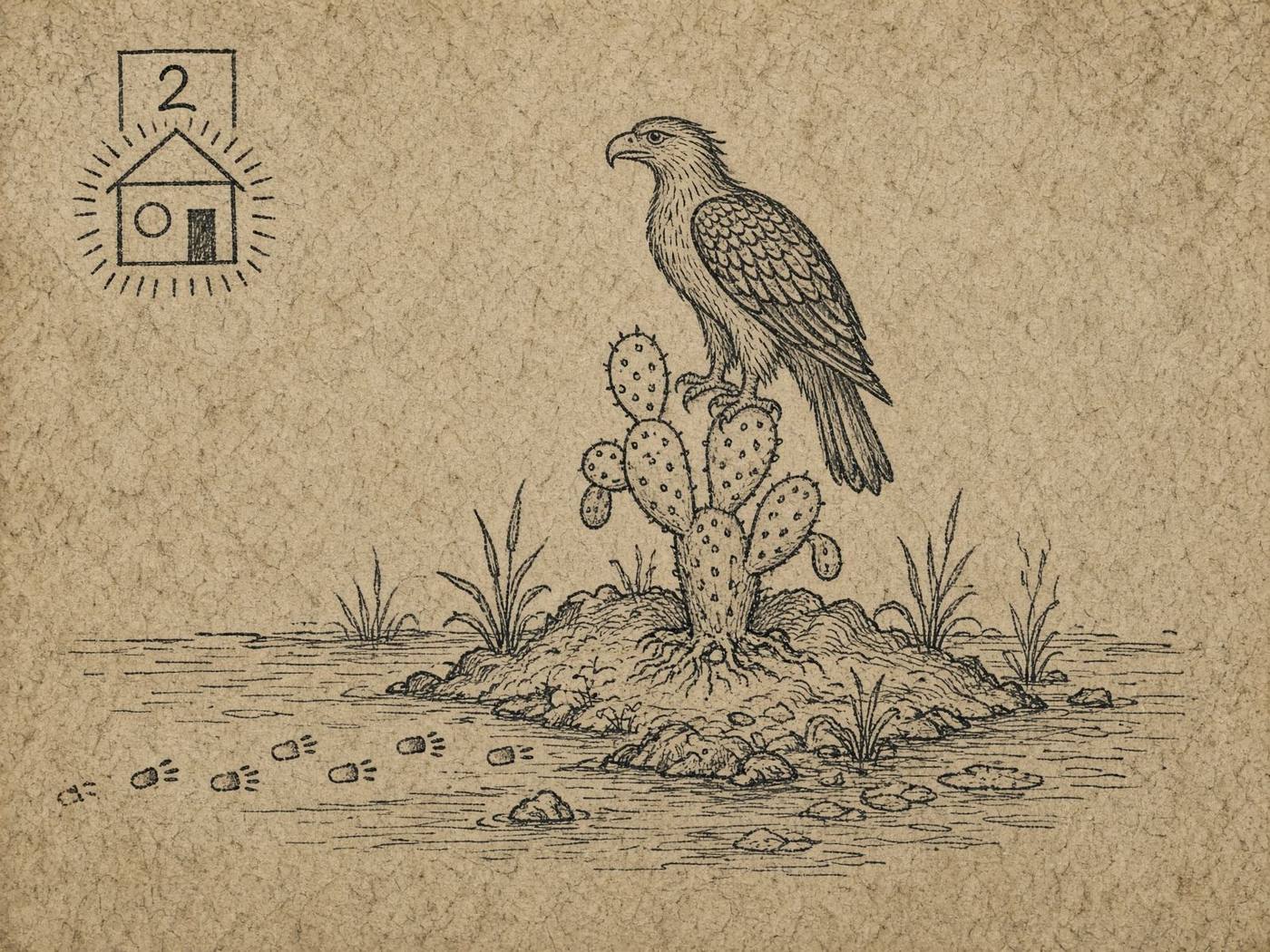
Not a tribe that always had the name. A people who took Mexi's bundle — the hummingbird of the left — walked with four priests (one named Shield-hand), and stopped when the eagle landed on the nopal.


Mēxi / Mexitli
The name we took
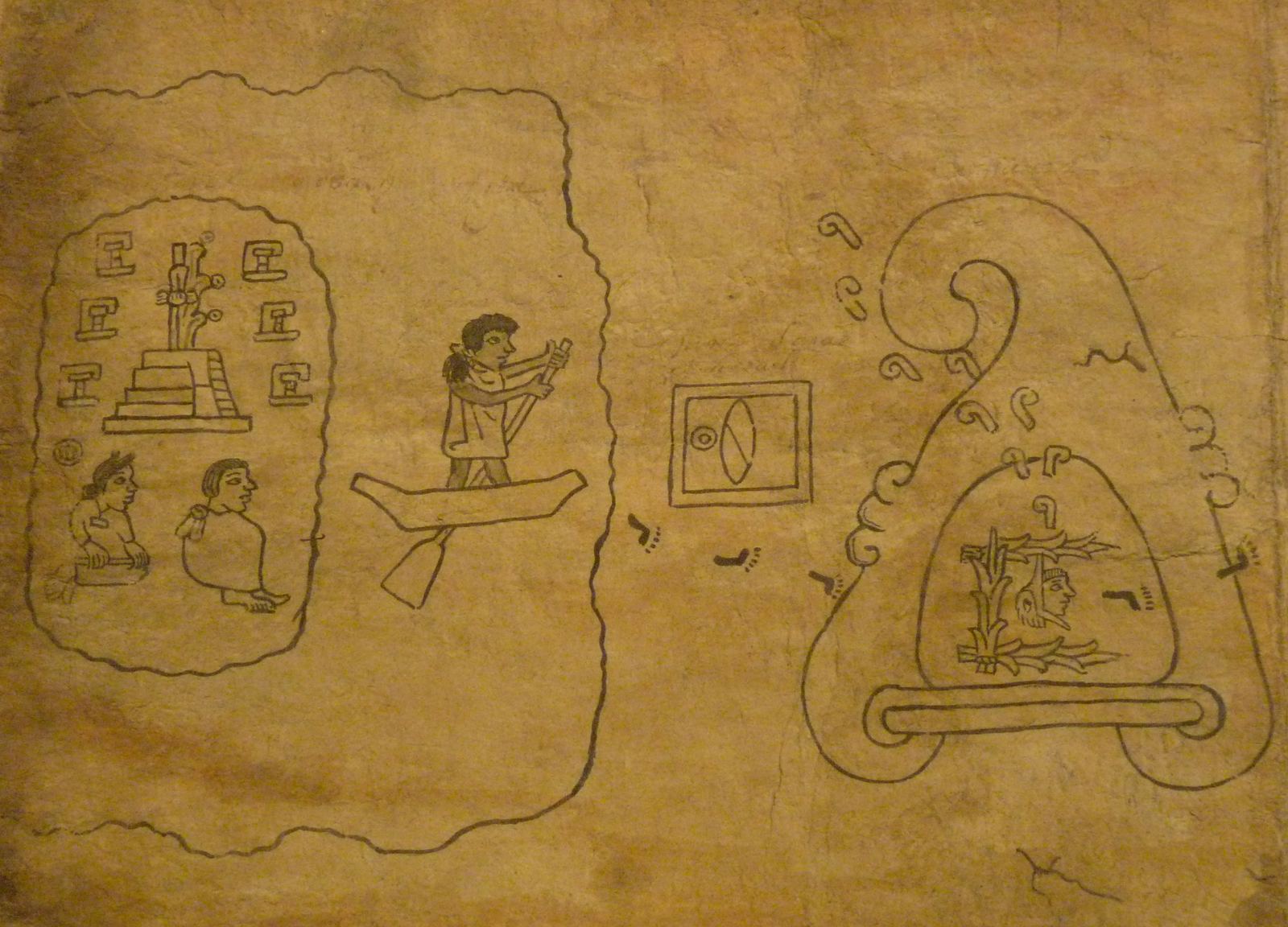
The people who walked out of Aztlan were still called Azteca. That name belonged to the island, not to the god they carried. On the road — the books disagree whether it was at Coatepec or after a split from those who would not follow — Huitzilopochtli spoke. You will no longer be called Azteca. You will be called Mexica.
Mexi, also Mexitli, is the patron's other name: Huitzilopochtli as the one who leads. Those who took up his sacred bundle, the tlaquimilolli, took his name. Mexihcah means the people of Mexi. Mexico is the place of Mexi. Some colonial writers also speak of a human priest-leader called Mexi. Both readings sit in the books. The point does not change: we are Mexica because of Mexi.
Those who refused the bundle kept other names and other roads. The Mexica were the ones who carried the hummingbird into the valley of the lake.
Huitzilopochtli is the hummingbird. Why that bird, and why a shield is a name, is taught in the old ways.
Teomamaque
The four who carried the god
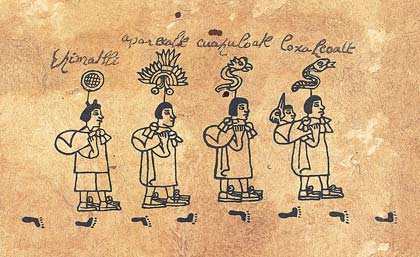
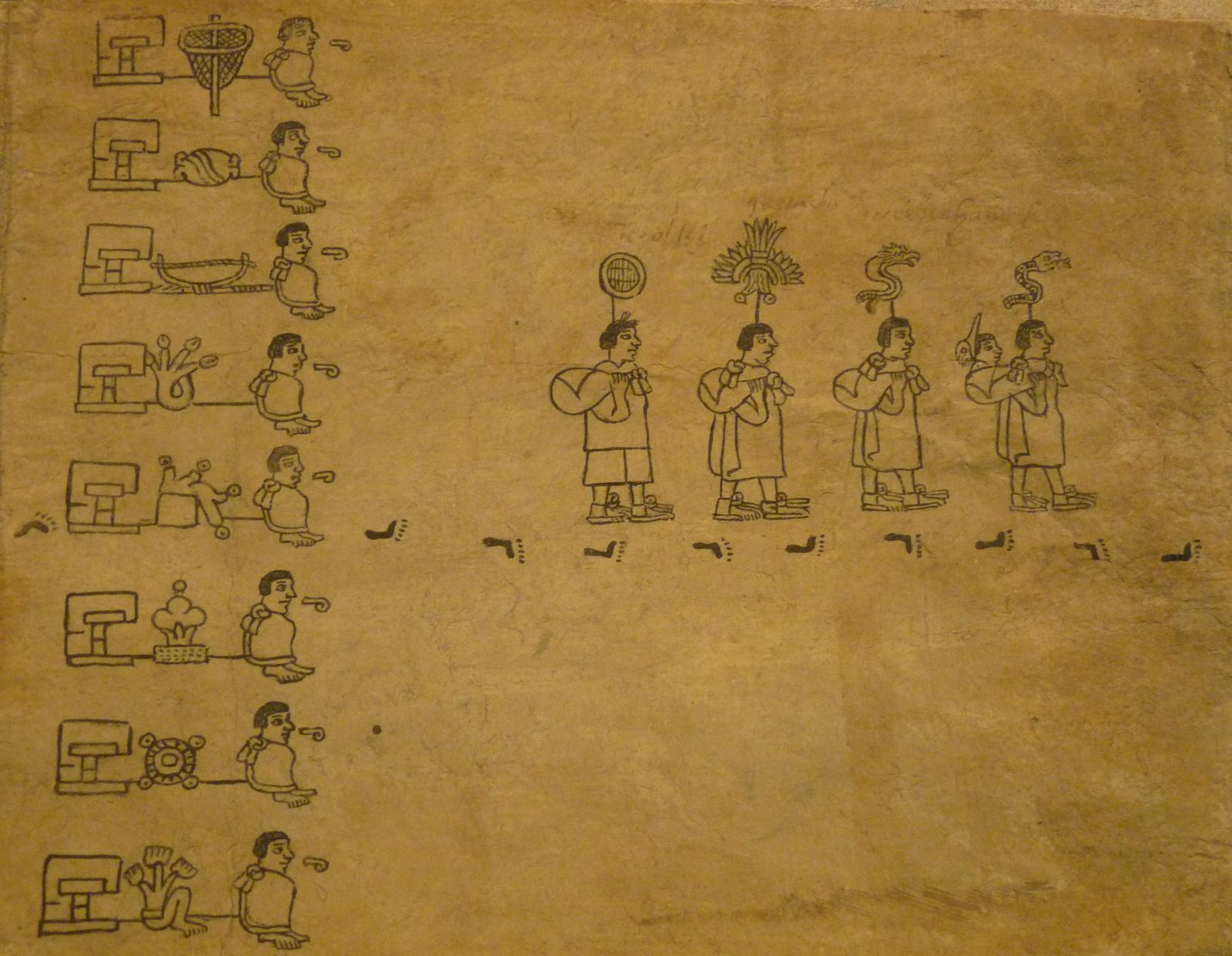
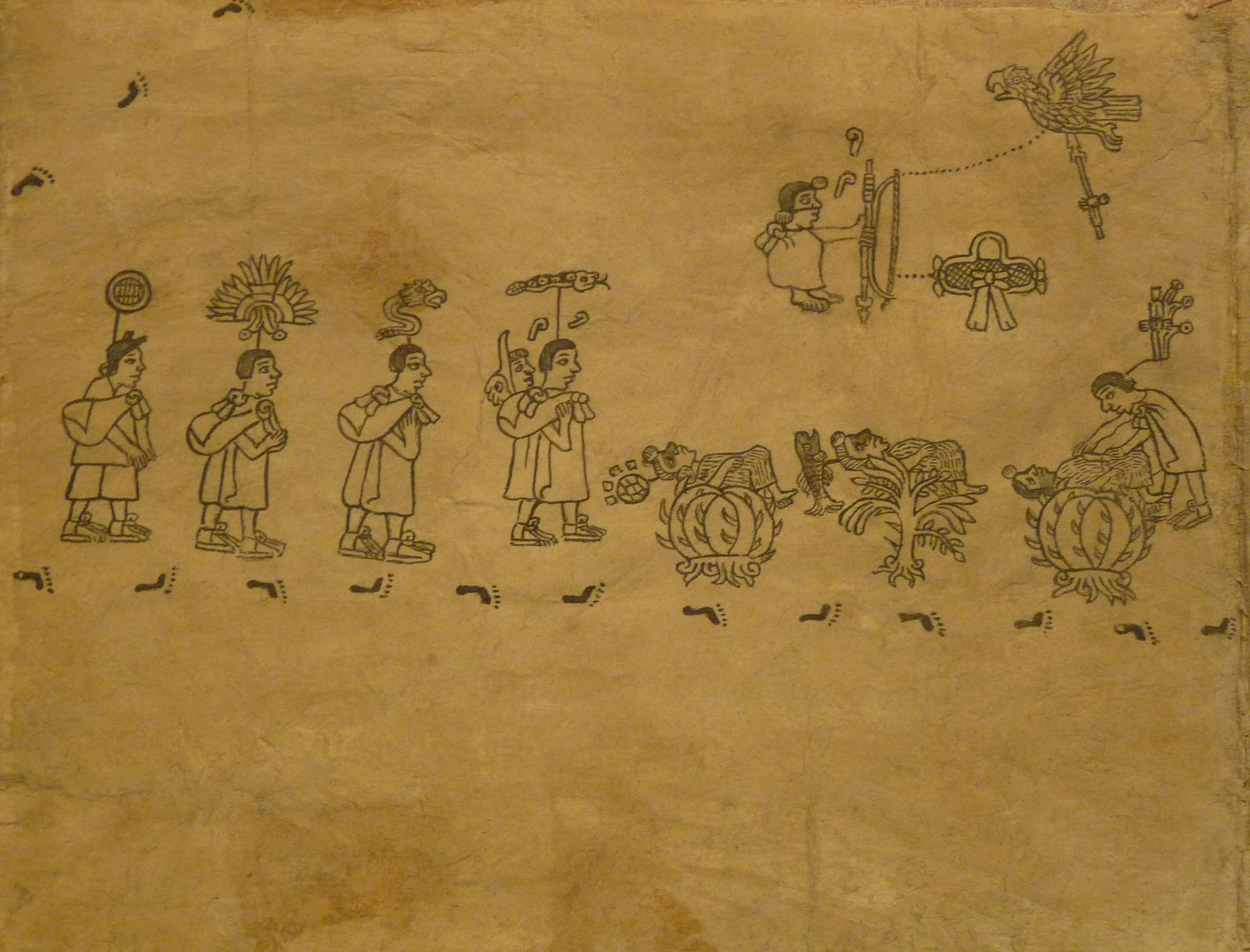
The Mexica had no speaker-king on the migration. They had four teomamaque — god-bearers — who walked the tlaquimilolli, the sacred bundle that was Huitzilopochtli's presence on the road. Codex Boturini and the later chronicles name these four.


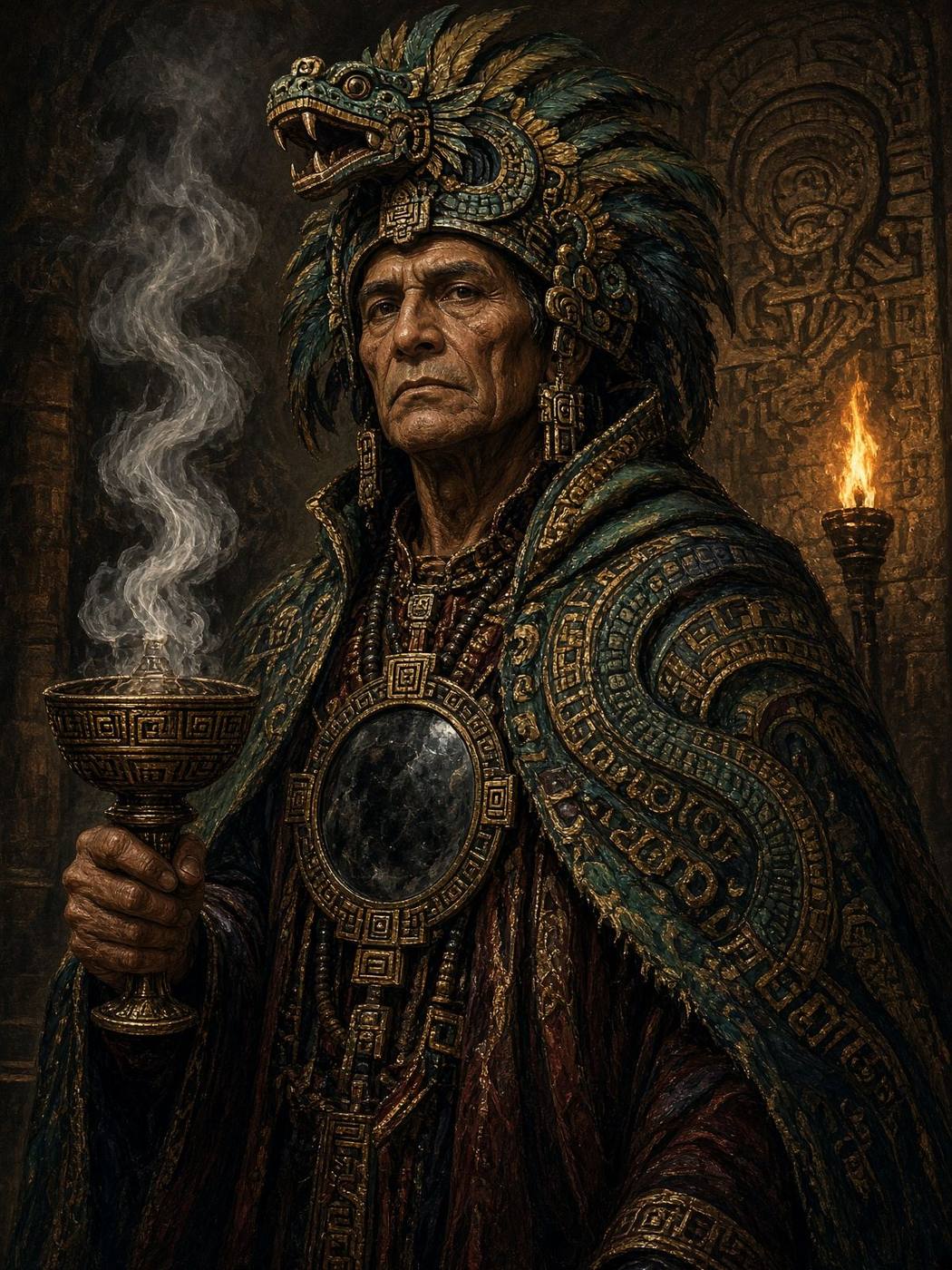
Tezcacōātl
Mirror Serpent
Counsel of the bundle
First among the four in most lists. The obsidian mirror is how a god sees and how a people is advised. Tezcacoatl walked at the head of the litter that held Huitzilopochtli, and the road was taken by that seeing — not by a king, not yet. The Mexica had no tlatoani on the migration. They had four priests and a wrapped god.

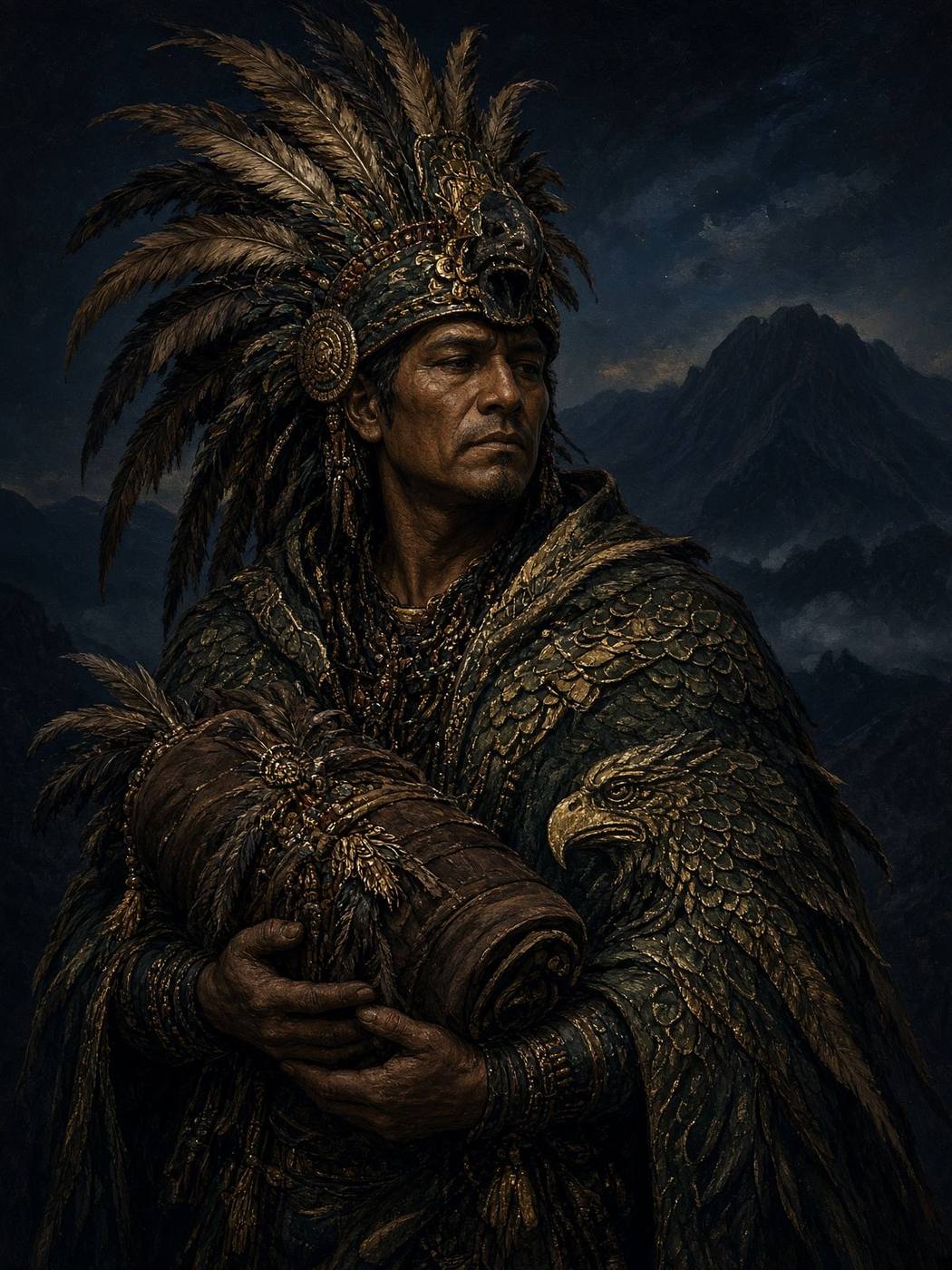
Cuāuhcōātl
Eagle Serpent
The sun's bird on the road
Eagle and serpent in one name — the same pairing that would later sit on the cactus in the lake. Cuauhcoatl kept the war-face of the bundle: the people would not be farmers-only, not even on the walk. The eagle was already in the priesthood before it was in the flag.

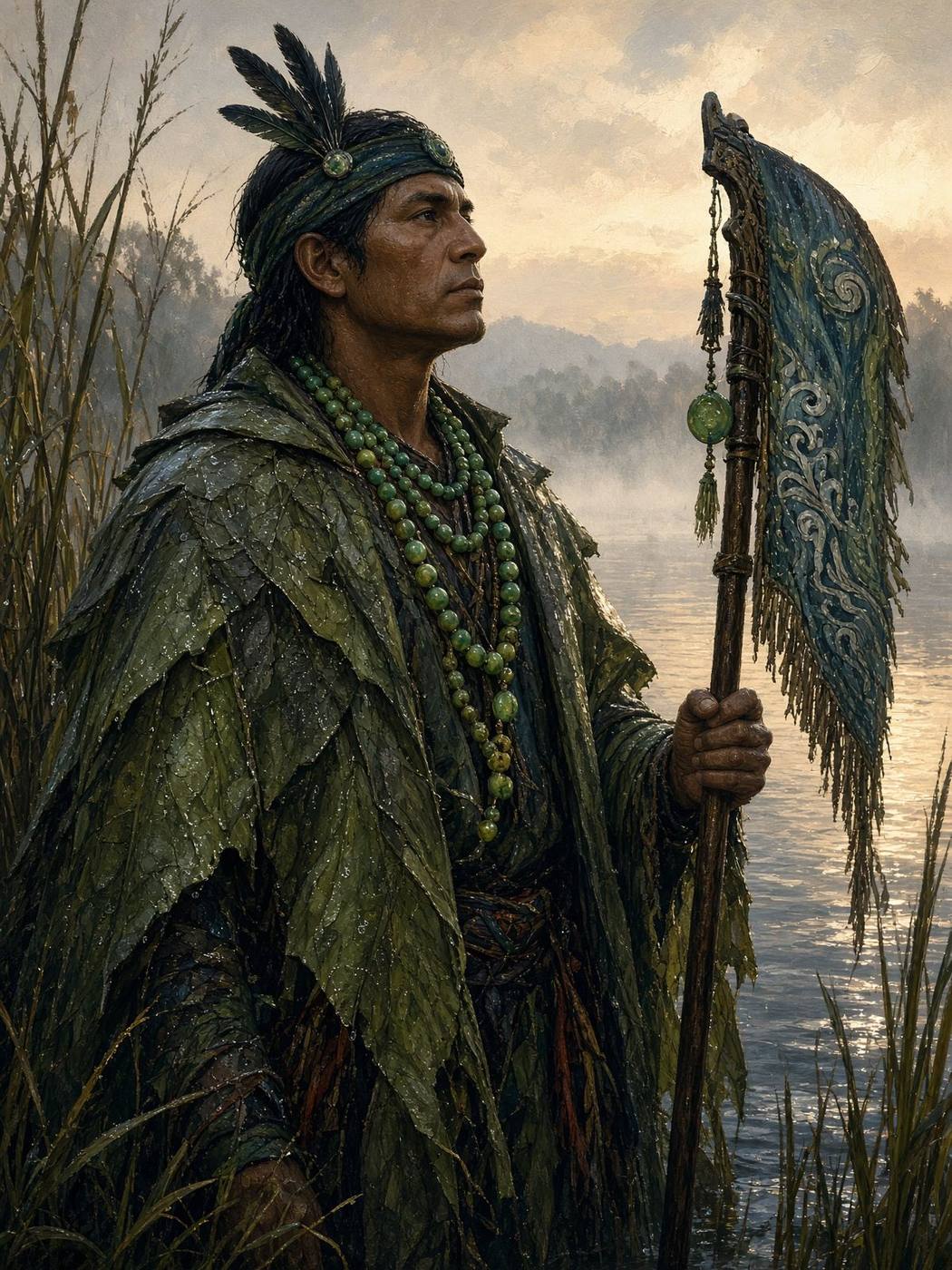
Apanecatl
He of the water banner
The lake they were walking toward
Water in the name, a banner in the hand. Apanecatl is the bearer who already belongs to canals and reeds — to the place they had not yet seen. Huitzilopochtli promised an island. Someone had to carry that promise as a flag, not a rumor.

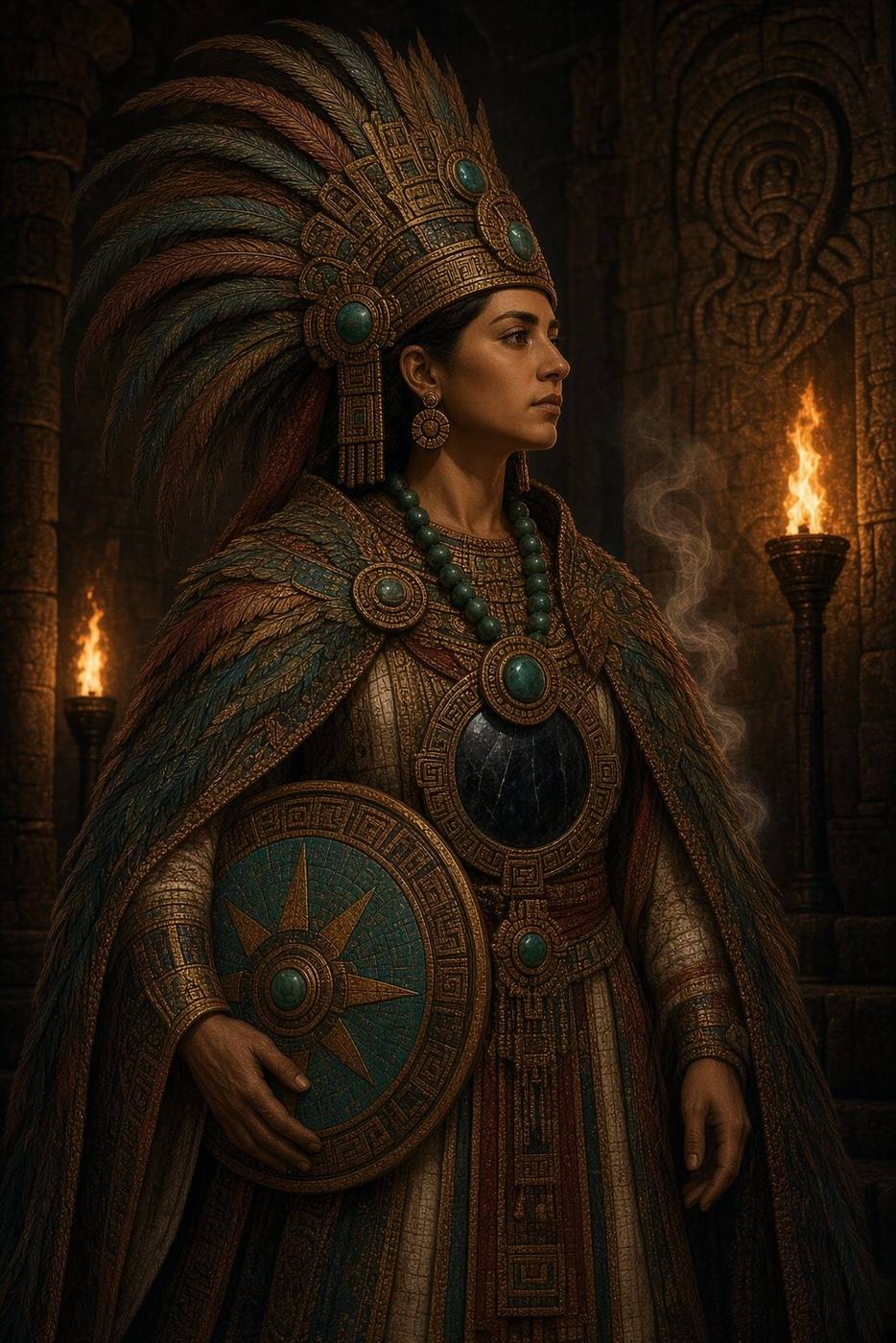
Chimalma
Shield-hand
The woman who carried the god
Chimalma is named with the three men as a teomama, a god-bearer. The books do not make her a footnote. She carries a shield and a share of the bundle. She is not the Mixtec Chimalman, mother of Quetzalcoatl in other stories — same name-root, different life. On this road she is one of the four who made a people Mexica.
The road
From the island to the empire
A remembered road, not a dated march. Years below are the usual schoolroom numbers. The walk itself is older than those numbers, and Tlacaelel later recast parts of it to fit an empire.
01
Aztlan
The island of herons / whiteness
Before the count we use
An island in a lake, in the north of the stories. Whether it is a real shore or a remembered other-world, the Mexica said they came from water. They left it because Mexi told them to walk.
02
Chicomoztoc
Place of the seven caves
The split of tribes
Seven caves, seven peoples. Xochimilca, Chalca, Tepaneca, Acolhua, Tlahuica, Tlaxcalteca, and last the Mexica. The others went ahead. The Mexica stayed with the bundle and took the slow road.
03
The renaming
No longer Azteca
On the road
Huitzilopochtli — Mexi — forbade the old name. From here the walkers are Mexica. The four priests carry that word as much as they carry the cloth.
04
Coatepec
Serpent Mountain
Myth and stop at once
Where Coatlicue conceived the war god from a ball of feathers, and Coyolxauhqui was thrown down the stairs. A mountain on the map and a mountain in the temple. The Mexica would later rebuild it in stone at Tenochtitlan.
05
Tollan
The reed place — Tula
A stay among ruins of greatness
The Toltec city of the stories. The Mexica sat near its shadow and learned its crafts, then moved on. Later kings would claim Tollan's blood. That claim is politics as much as memory.
06
Chapultepec
Grasshopper Hill
First foothold in the valley
Springs, a hill, a first settlement on the western shore of the lake. The valley's older peoples drove them off. The Mexica were not yet lords. They were refugees with a god.
07
Culhuacan
Place of those with ancestors
Servitude, then the reeds
They served Culhuacan and asked for a princess to make a goddess. The rite ended in insult and exile. Driven into the reeds and swamps of Lake Texcoco, they were at the edge of the story Mexi had promised.
08
Mexico-Tenochtitlan
The nopal on the stone
2 Calli — 1325 in the usual count
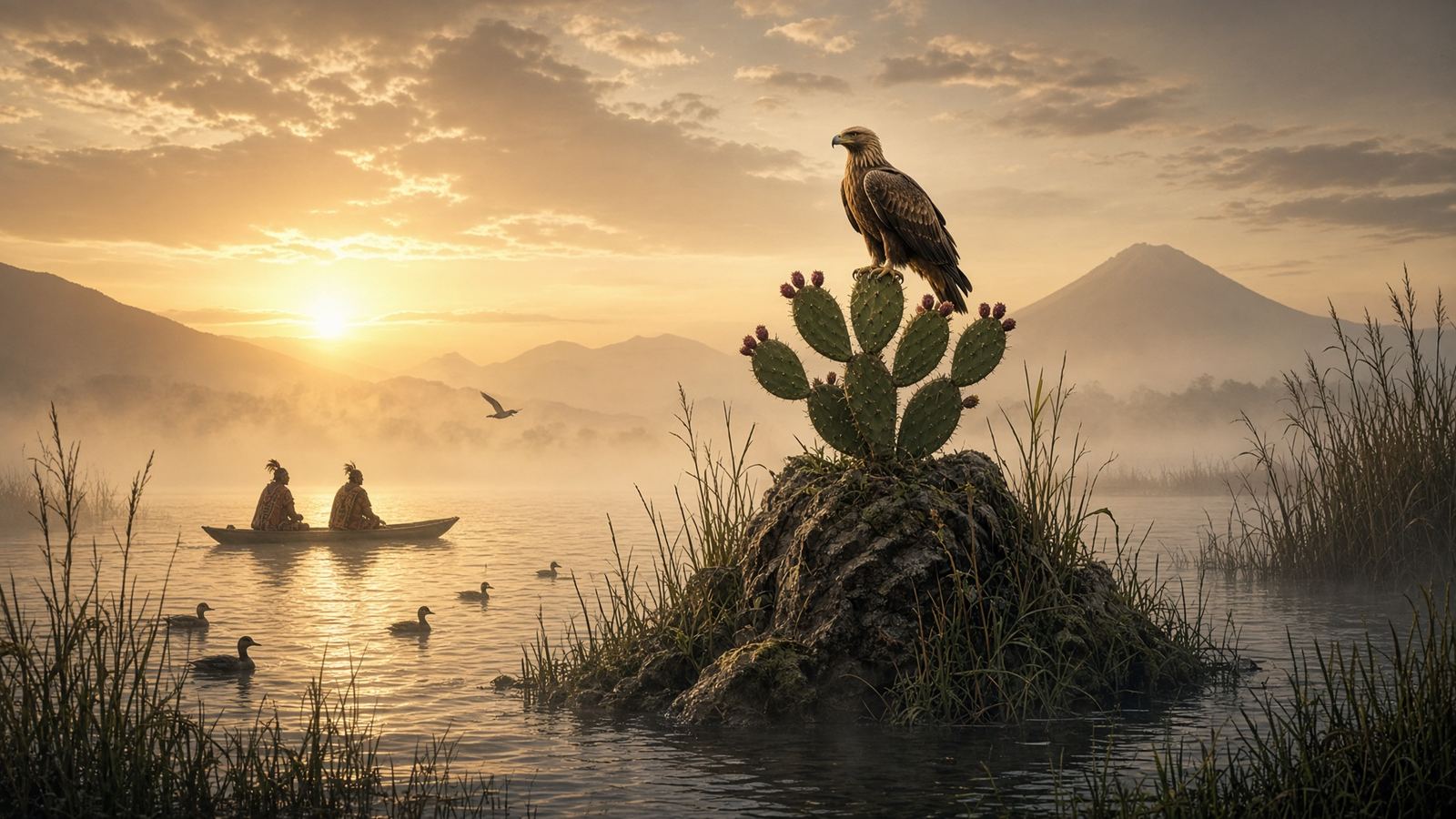
Priests Cuauhtlequetzqui and Axolohua found the sign: an eagle on a nopal, on a rock in the water. Tlaloc, in one telling, rose from a spring and gave permission. The city is named for Tenoch, and for Mexi. Traditional date, not a carved cornerstone. Archaeology finds a city that grew fast after that century.
09
The Triple Alliance
Excan Tlatoloyan
1428
Itzcoatl of Tenochtitlan, Nezahualcoyotl of Texcoco, and Totoquihuaztli of Tlacopan broke Azcapotzalco. Tlacaelel, cihuacoatl of the Mexica, recast the old books so the origin would match the empire. From here the valley ate outward — until 1519.

The stop
The eagle landed. The walk ended.
That island became Mexico-Tenochtitlan. The four priests had delivered Mexi to the lake. What came after — chinampas, the twin pyramid, eagle and jaguar knights — is the city keeping the name.