The tlatoani
Motecuhzoma Xocoyotzin
mo-teh-kwoo-SO-mah sho-ko-YO-tseen
Ninth speaker of Tenochtitlan. English books say Montezuma II. In Nahuatl he is Motecuhzoma Xocoyotzin — Motecuhzoma the Younger. Tlatoani means “he who speaks.” This lesson sits with the rise and fall because his reign is the height of the island, and his death is the door of the siege.
Biography
Who he was
Born about 1466. Son of Axayacatl, who had been tlatoani before Tizoc and Ahuitzotl. He was trained in the calmecac as a priest as well as a lord. In 1502 (some counts 1503) he took the reed throne after his uncle Ahuitzotl. He was about thirty-six.
Xocoyotzin means the younger. It separates him from Motecuhzoma Ilhuicamina — Motecuhzoma the Elder, the fifth tlatoani, who ruled in the 1400s. Two kings, one name, two ages.
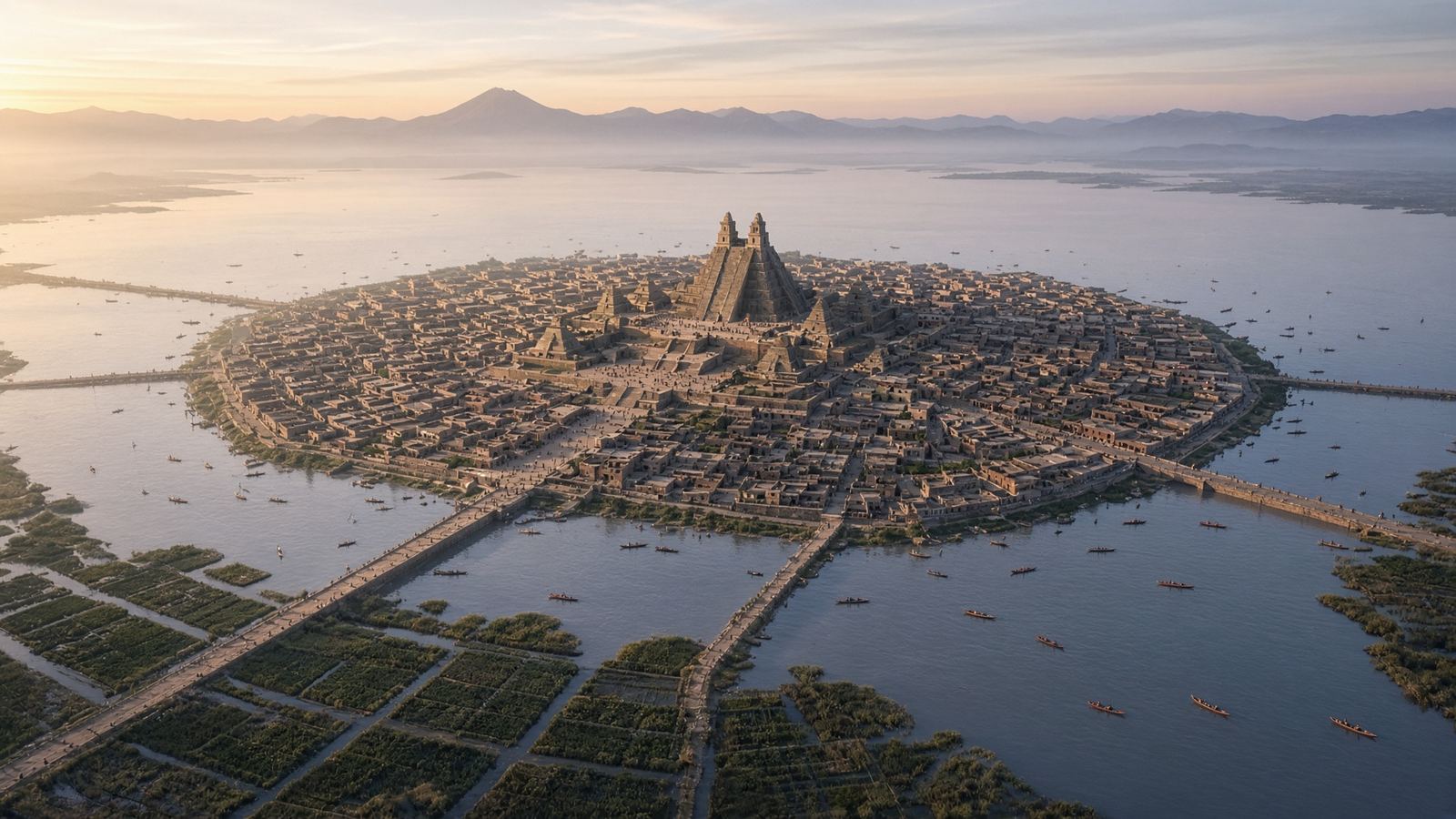
He was not a timid man in a feather cape. Spanish and later schoolbooks painted him weak so the conquest would look easy. The tribute books of his years show the opposite: the Triple Alliance at its widest, provinces from the Gulf to the Pacific sending cloth, cacao, feathers, and gold. He rebuilt and enlarged Templo Mayor. He tightened the palace around himself. That is a strong tlatoani, not a fool waiting to bow.
Rule
1502–1519
The office: huey tlatoani of Mexico-Tenochtitlan, first among the Triple Alliance with Texcoco and Tlacopan. Eagle and jaguar knights under his count. Calpixque (tax governors) in the provinces. Cuachtli — tribute mantles — counted in flags.
He was a man of the gods as much as of war. Florentine Codex Book 12 tells omens in his last years: a comet, a fire on the temple, a lake that boiled. Those are how the books remember the end of an age. They are not proof he thought Cortés was Quetzalcoatl. That “returning god” story is mostly later Spanish framing. Native accounts show a king who received strangers, watched them, and tried to keep the city.
November 8, 1519 — Cortés entered Tenochtitlan on the southern causeway. Motecuhzoma received him. Within days the Spanish lodged in a palace and then held the tlatoani inside his own house. That is not hospitality. That is a hostage in the capital.
Death
1520
May 1520 — while Cortés was away on the coast, Pedro de Alvarado massacred Mexica nobles in the sacred patio during Toxcatl. The city rose. Motecuhzoma was still a prisoner.
He died in June 1520, in the days around what the Spanish later called la Noche Triste — the night they fled the island and many of them drowned in the canals, weighed with gold.
How he died is not one story. Spanish letters say his own people stoned him when he was put on a rooftop to calm them. Nahuatl informants of Sahagún, and other native counts, say the Spanish killed him — stabbed or strangled in the palace. Historians still argue. This house does not pretend the rooftop story is the only one. A king held hostage, a city in revolt, two armies writing the death. That is the truth we have.
After him: Cuitláhuac, his brother, drove the Spanish out, then died of smallpox. Then Cuauhtémoc — the last tlatoani — held the island until 13 August 1521. Year 3 Calli, day 1 Coatl. The fall is told on Rise and fall.
The name
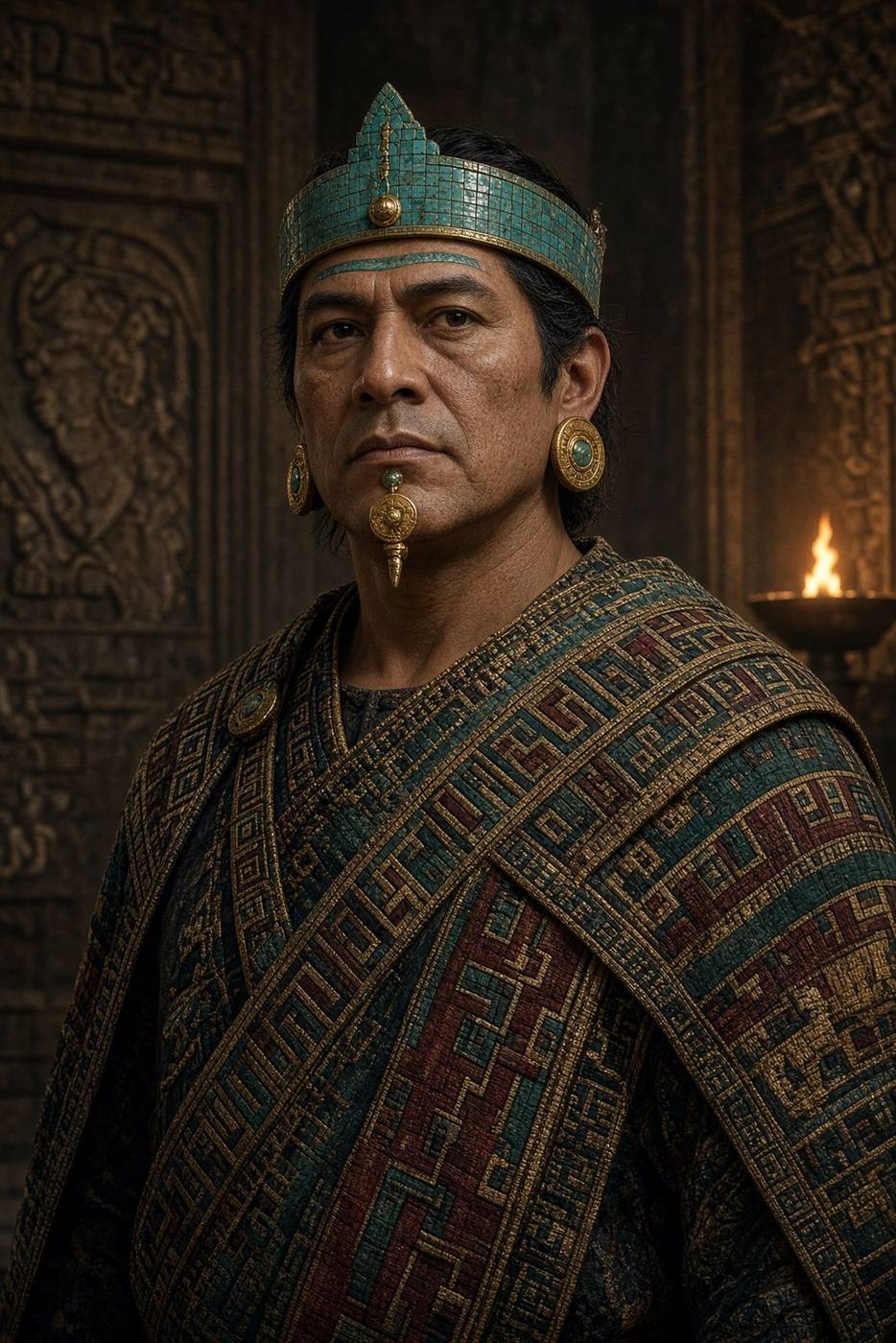
Motecuhzoma — mo-teh-kwoo-SO-mah. Often written Moctezuma. Montezuma is the English school spelling. Xocoyotzin — sho-ko-YO-tseen — the younger. Huey tlatoani — WEH-ee tlah-TOH-ah-nee — great speaker. Xiuhuitzolli — shee-oo-wee- TSO-lee — the turquoise royal diadem.
He belongs here, not as a mascot and not as a cartoon of surrender. He is the ninth speaker of the island, in the last years the Mexica ruled their own lake.