The house of living
How we lived
Calmecac, telpochcalli, the amanteca, tribute cloth, the dance. This hall is the everyday count — not only war.
Calmecac
The house of song
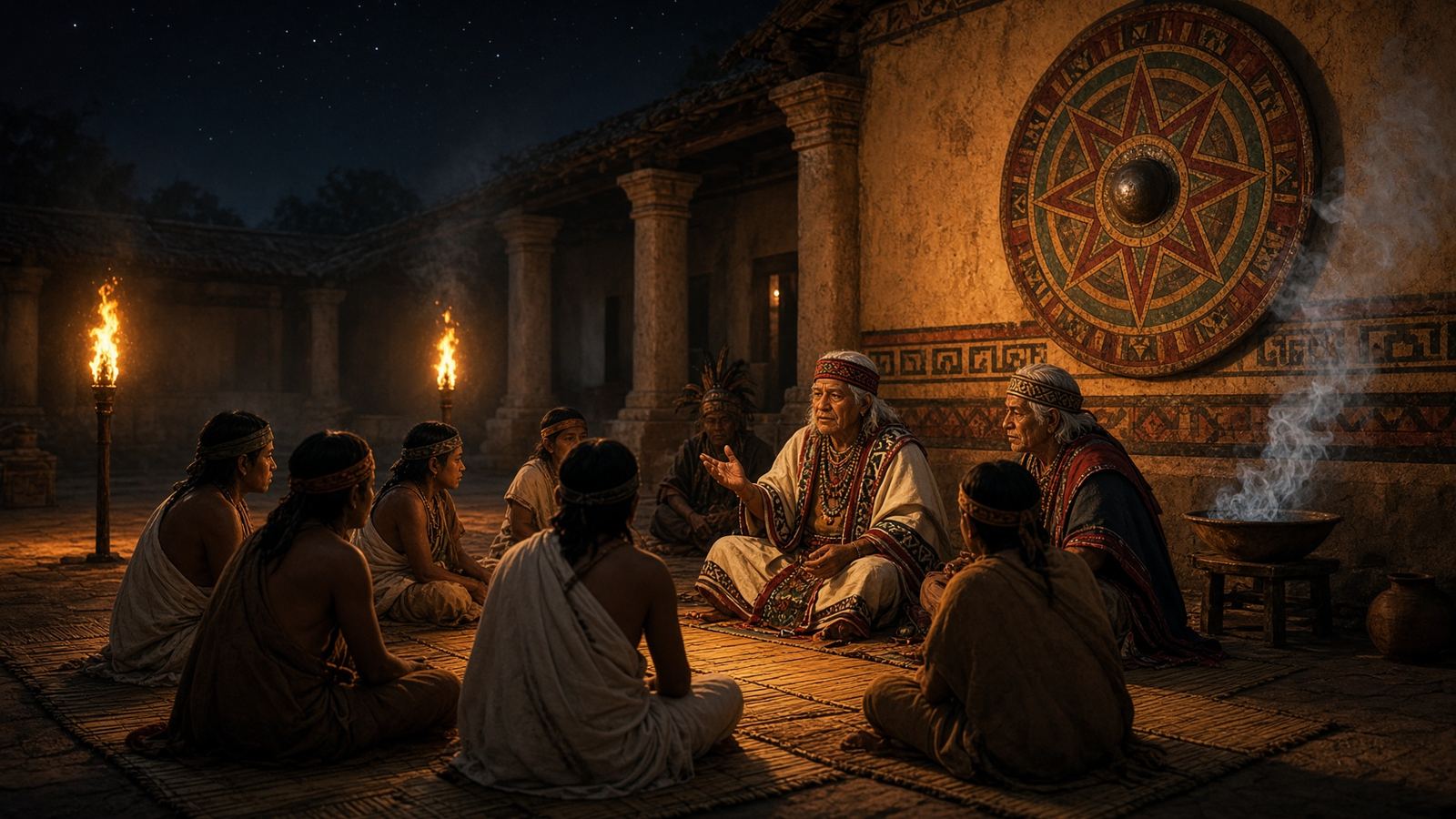
Calmecac: school of the nobles and of those taken for the priesthood. Cuicacalli: house of song. Telpochcalli: house of youth, where common boys trained. The word was taught at night, with copal, with the tonalpohualli. Flower and song — in xochitl in cuicatl — is how truth was kept.
Netotiliztli
The dance
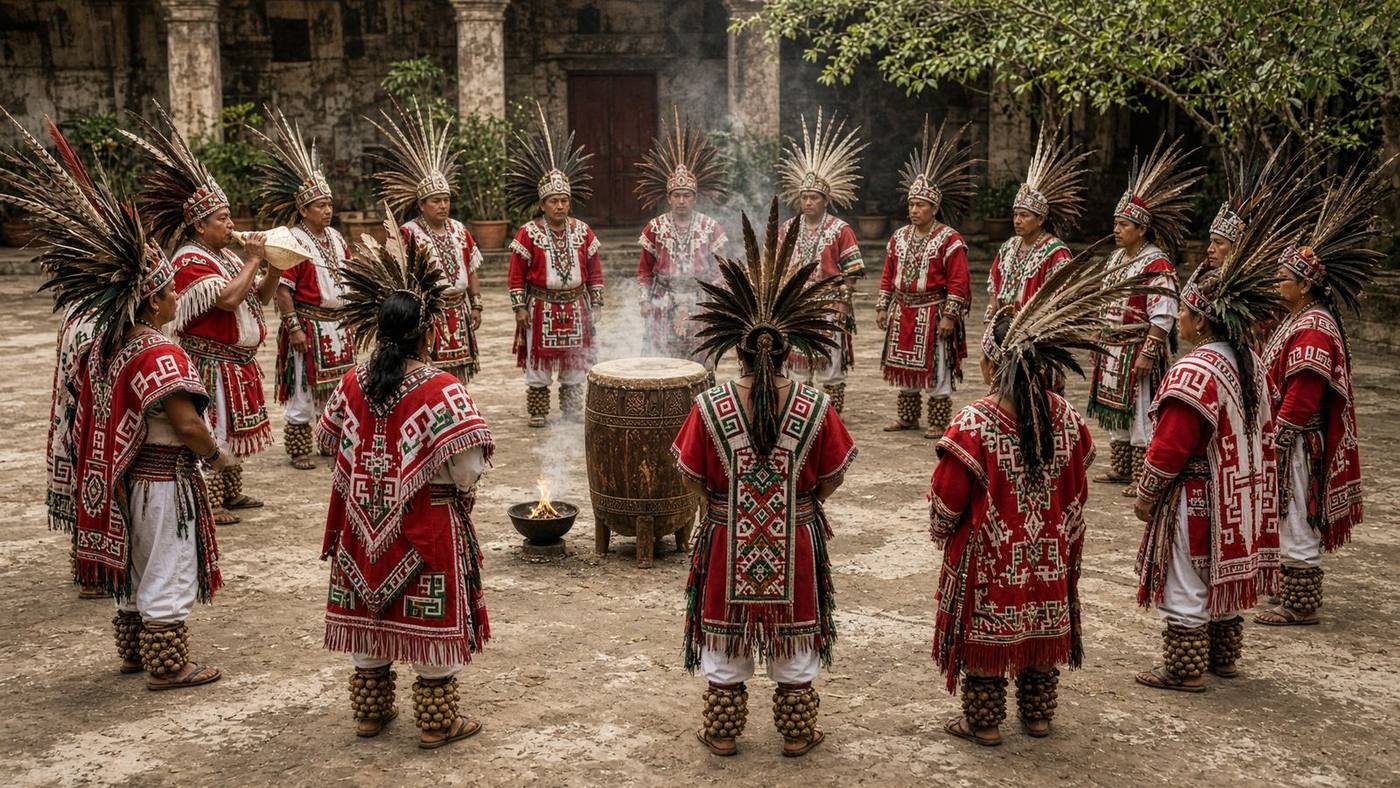
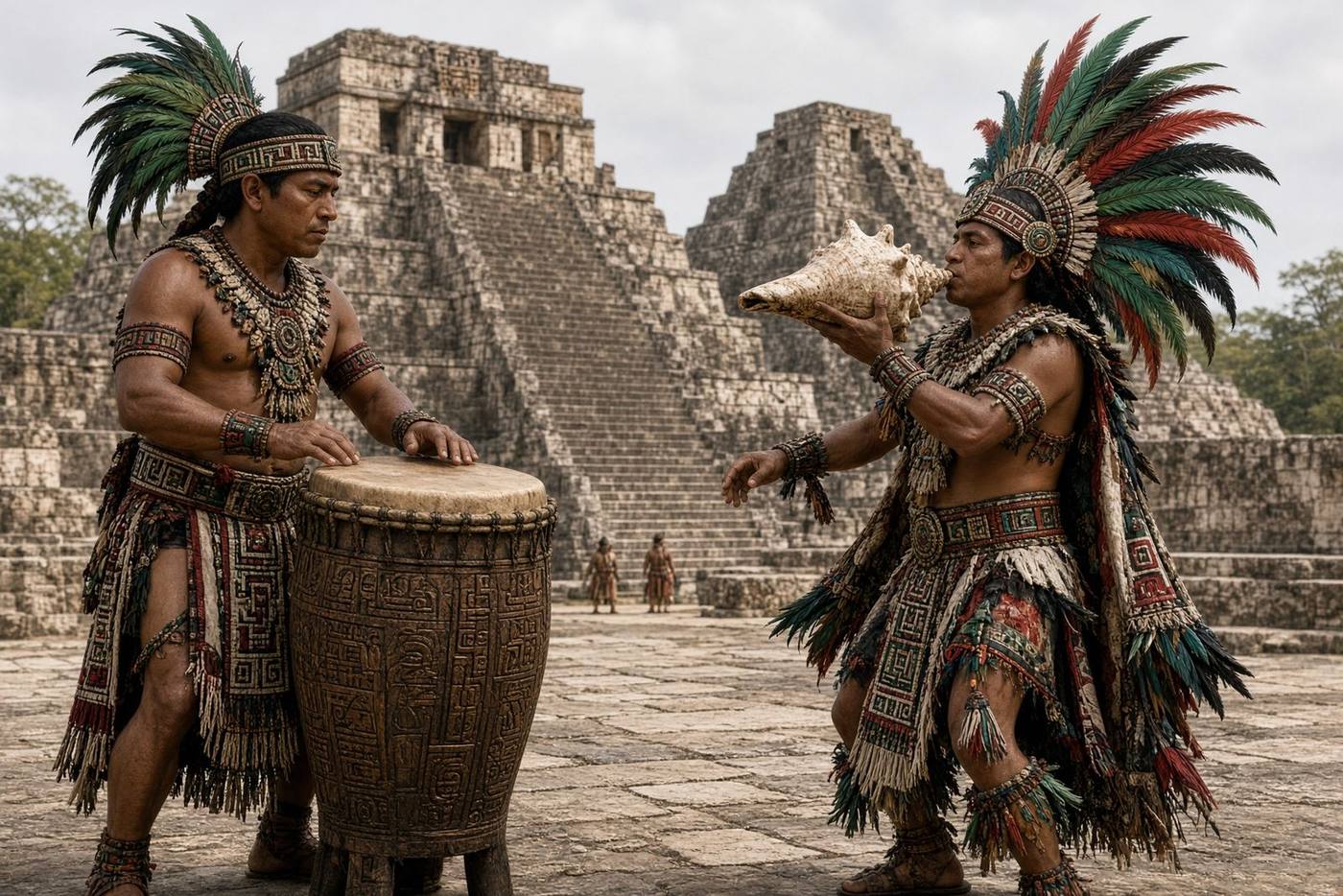
Aztec dances — known today as Danza Azteca or Conchero tradition — are ceremonial, spiritual dances rooted in Mexica rituals, performed with drums, conch-shell instruments, copal incense, and feathered regalia to honor deities such as Huitzilopochtli, Tlaloc, and Quetzalcoatl.
In the old tongue the offering-dance is netotiliztli (neh-toh-tee-LEESS-tlee) — dance as joy. Macehualiztli is dance as merited work, the body given to the gods. They were danced in the cuicacalli (house of song) and in the patio of the temple, to the huehuetl (upright drum) and the teponaztli (slit drum). Ankles wore ayoyotes — seed rattles. The conch (atecocolli) opened the four directions. Copal carried the breath up.
After the fall, the dance survived as Conchero — named for the concha, the armadillo-shell lute of the colonial circle — and in the twentieth century as Danza Azteca, a return toward Mexica form: circle, center fire, four winds, penacho of feathers. It is not a show. It is a prayer that walks.
Amanteca
Feather and cloth
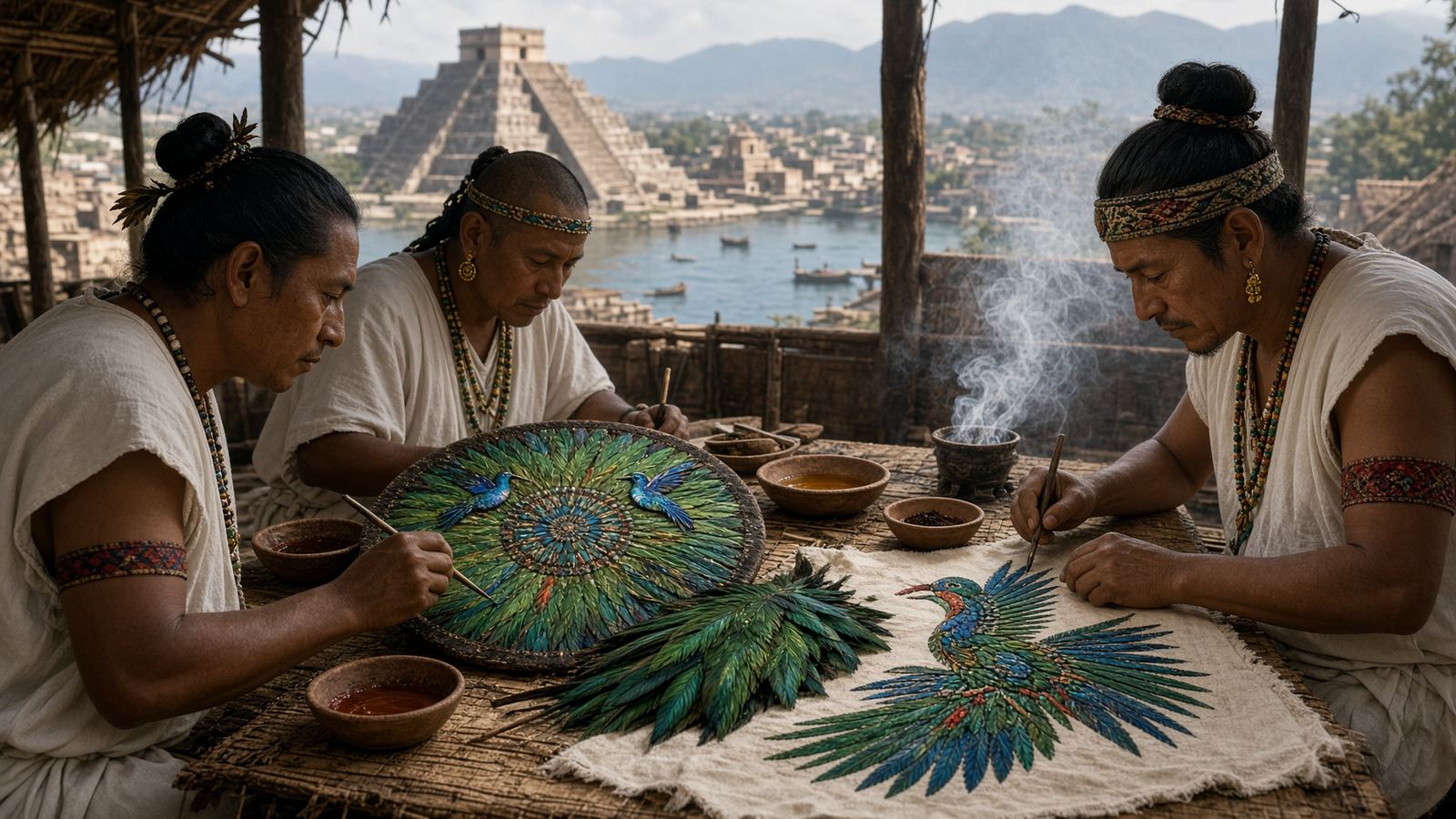
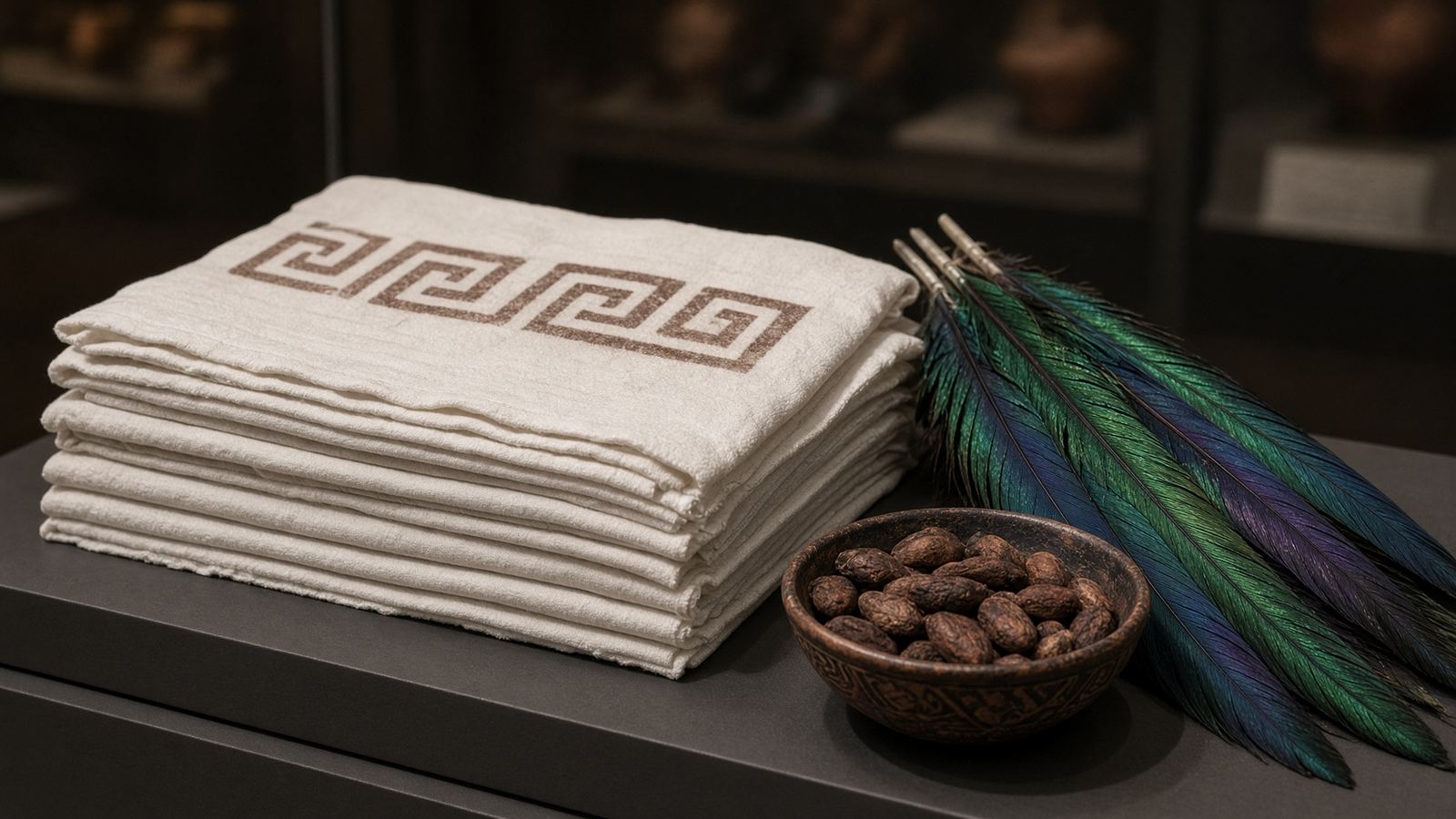
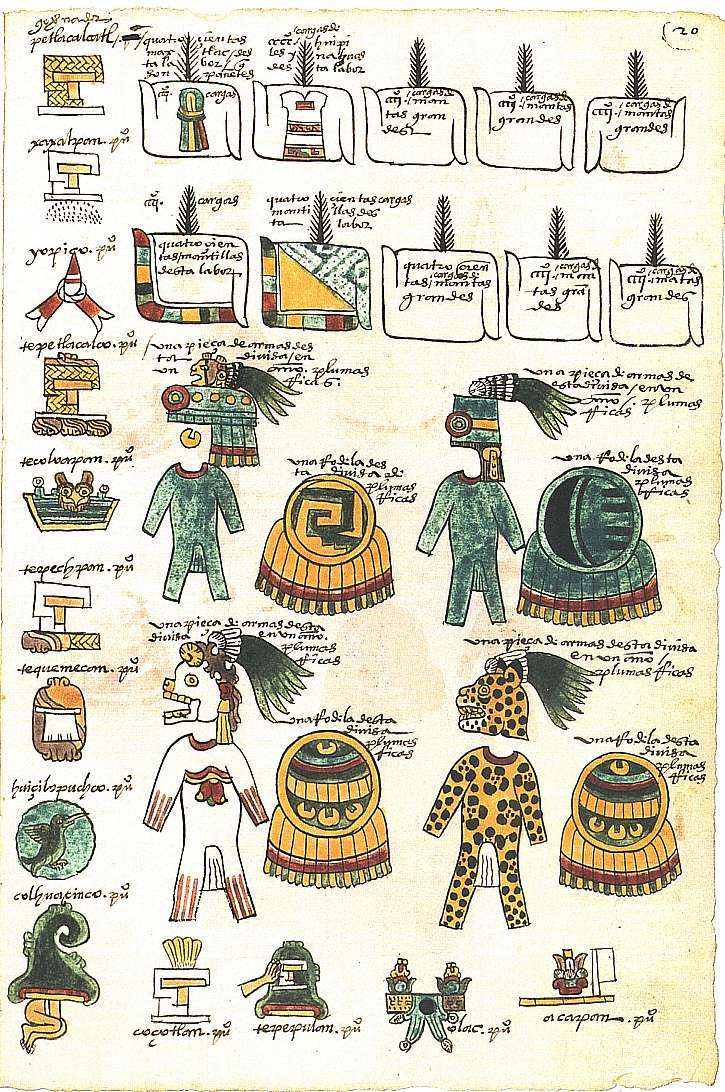
Amanteca: feather-mosaic artists. Chimalli, tilmatli, the god’s array — glue, down, quetzal, cotinga, hummingbird. Tribute lists in the Codex Mendoza and the Matrícula de Tributos name the loads: cuachtli (mantles), loads of cacao, bins of maize, bags of cochineal, quetzal tufts. Cloth was money. A mantle had a count.
Tribute
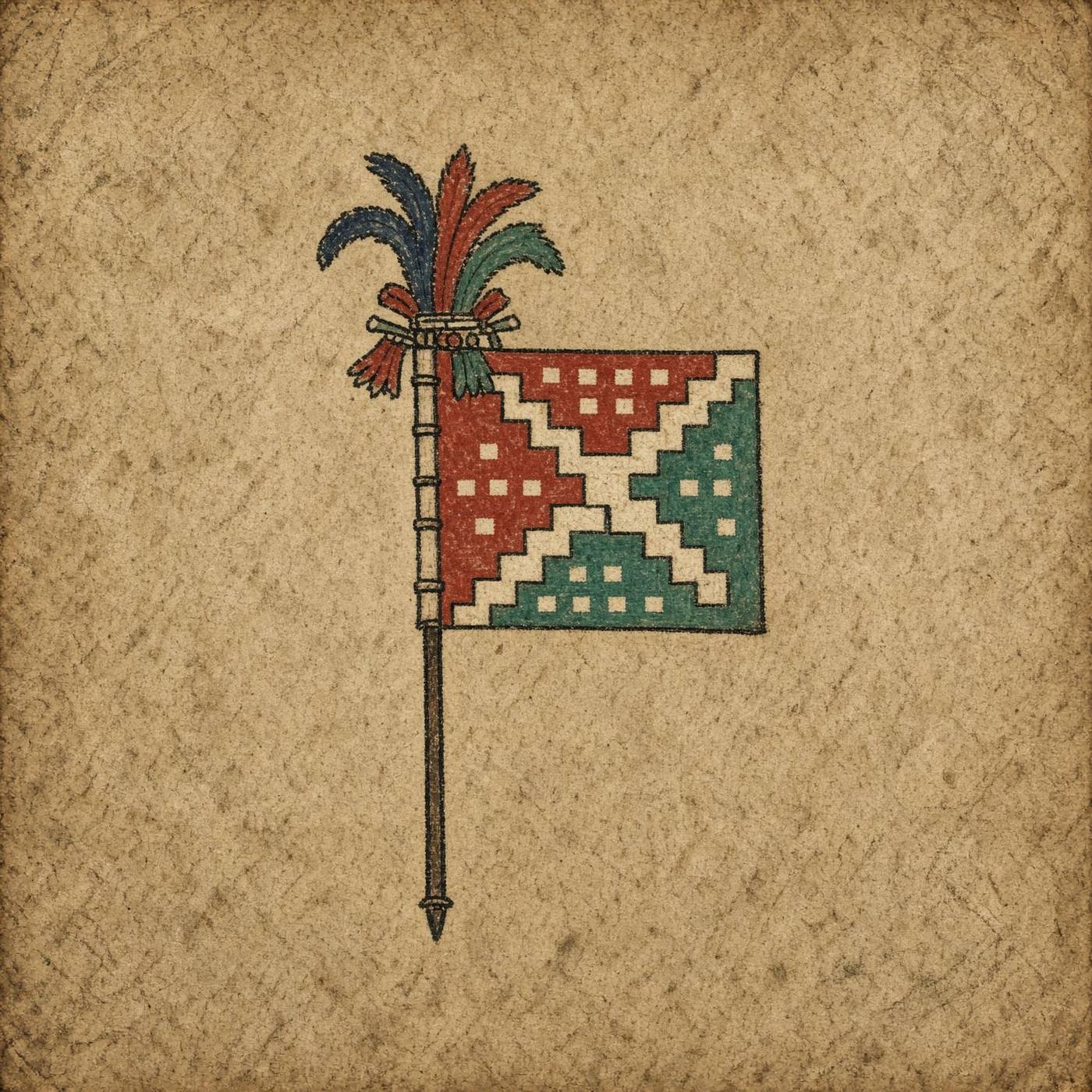
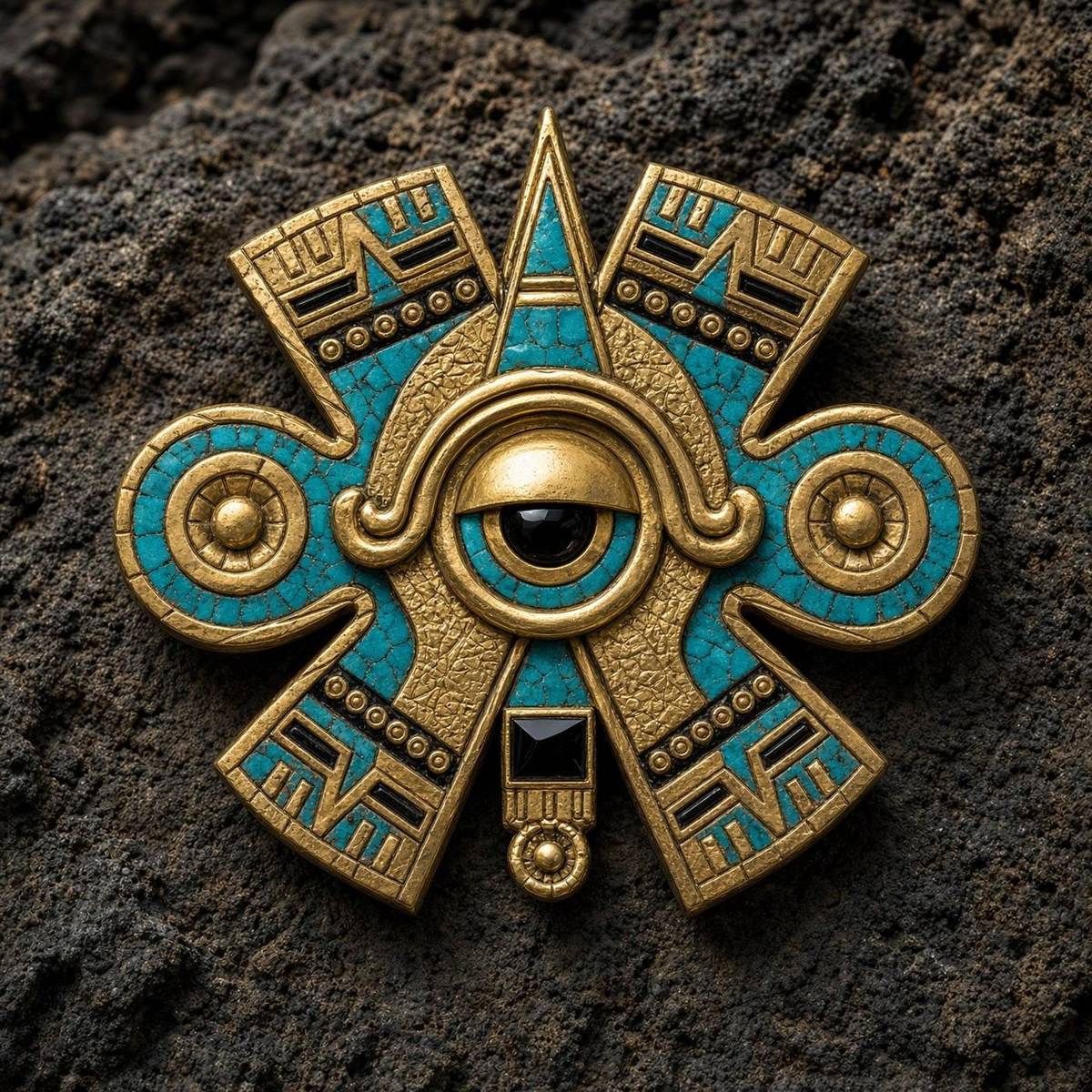
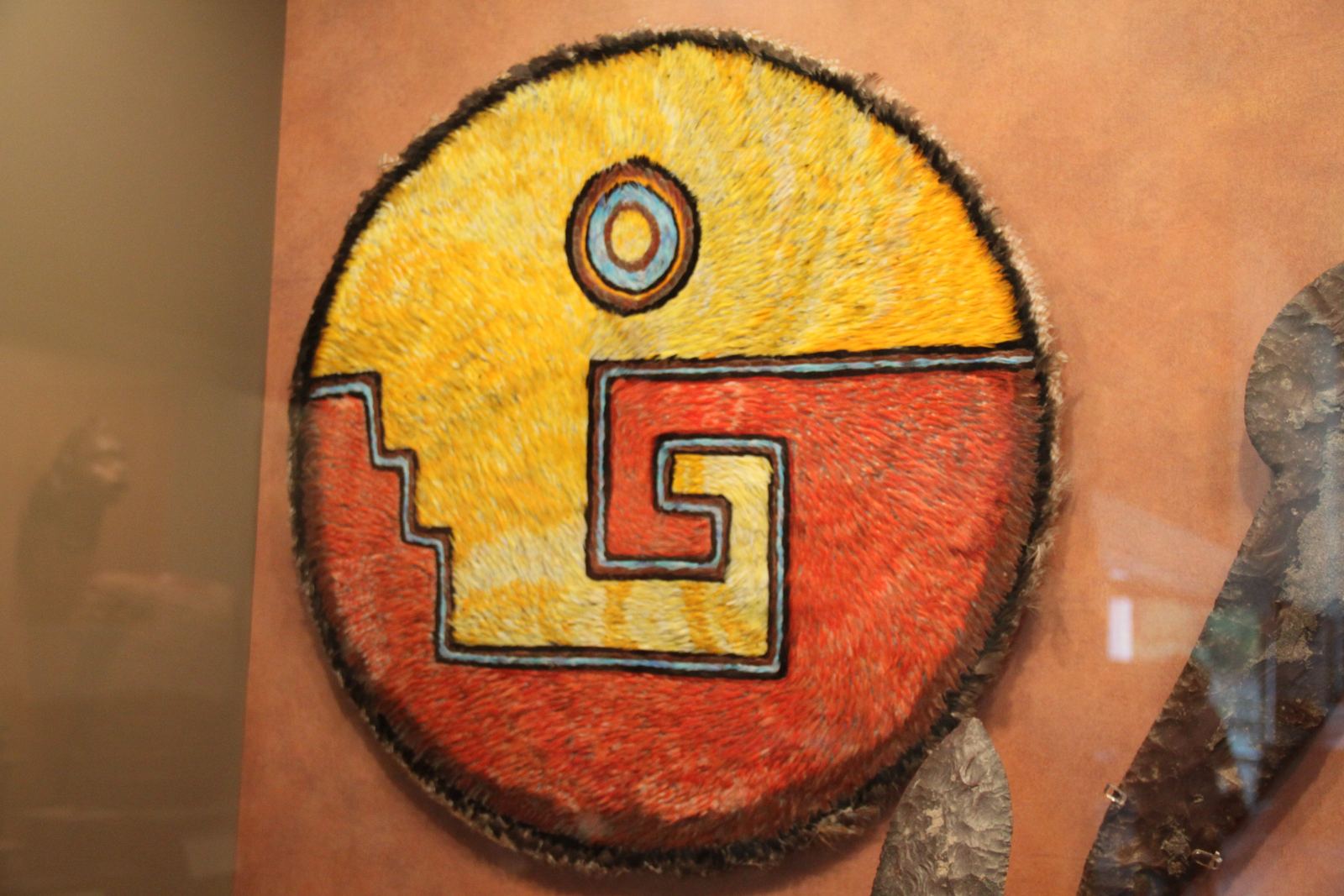
The Triple Alliance did not only take captives. It took cloth. Provinces sent numbered mantles — some plain cotton, some with the step-fret, some with the sun. That is why the G (xicalcoliuhqui) sits on both a Mixtec pectoral and a Mexica shield: the stair was a shared sign on tribute cloth long before it was a logo. A cuachtli (kwahch-tlee) is a mantle. A load of them had a count in flags.