The land
Cities
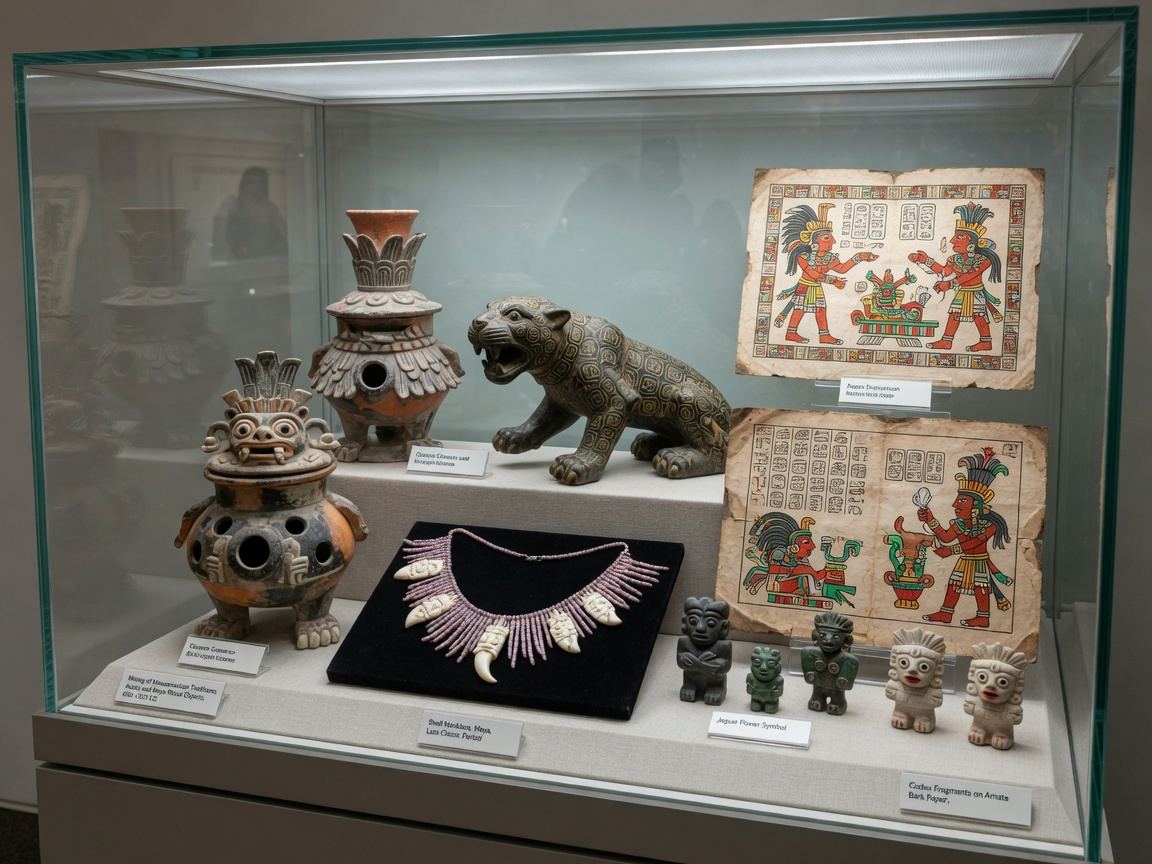
The right order of this land: Olmec, then Maya, then Toltec, then Aztec / Mexica. They overlap in time. They are not one people renamed. The Mexica inherited a science already old — calendar, ballgame, feathered serpent, maize, the 260-day count.
The order
Olmec → Maya → Toltec → Mexica
1. Olmec
c. 1500–400 BCE · Gulf Coast
San Lorenzo, La Venta, Tres Zapotes. First great cities of Mesoamerica. Colossal basalt heads. Early Long Count seed. Ballgame. Were-jaguar. Maize as the body of people. Everyone after them drank from that well — Maya, Teotihuacan, Toltec, Mexica.
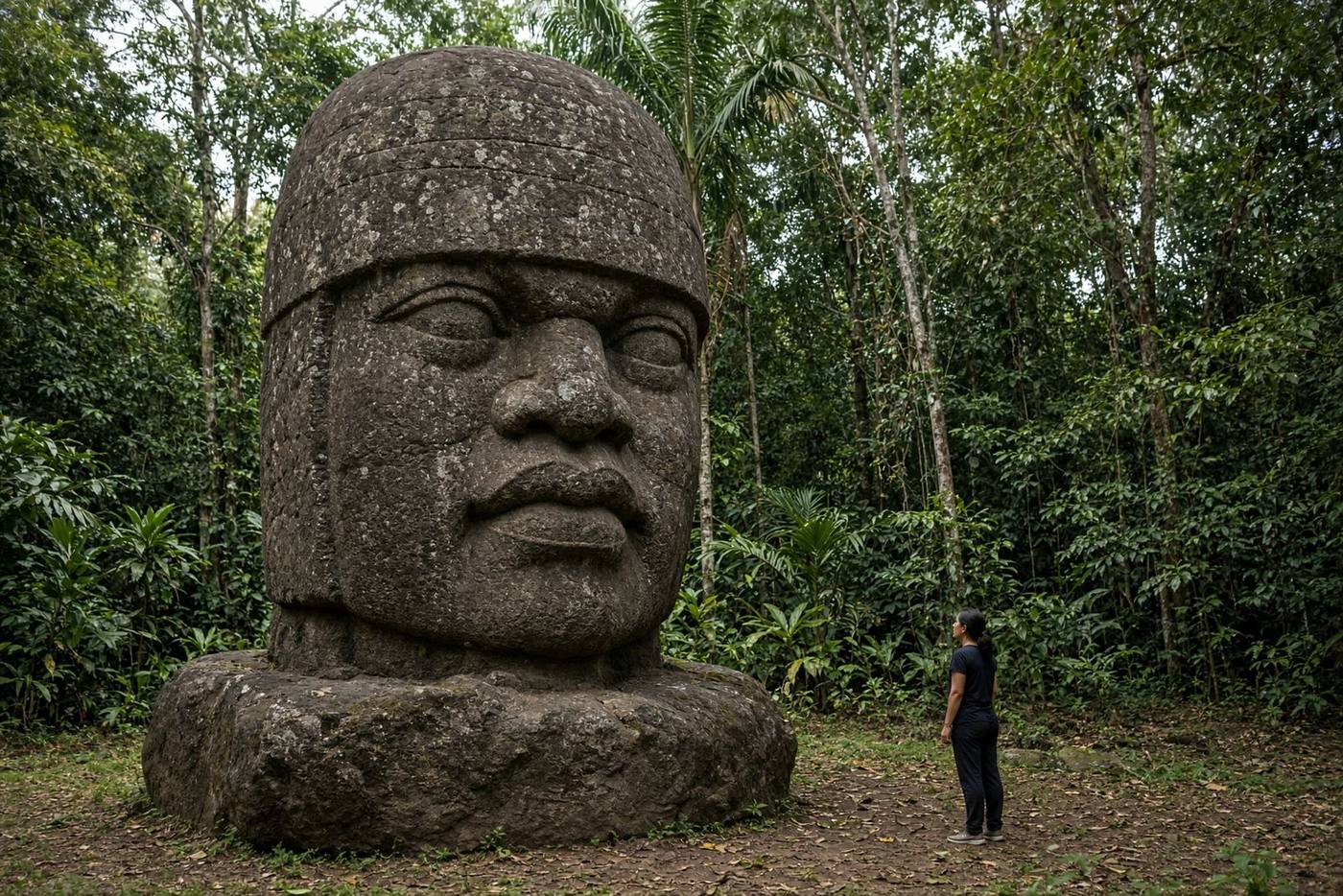
Olmec colossal head. Helmeted rulers in basalt. The first cities. 2. Maya
Formative through Classic and Postclassic · lowlands and highlands
Tikal, Palenque, Copán, Calakmul in the Classic. Later Chichén Itzá, Uxmal, Mayapán in Yucatán. Full writing. The tzolkʼin of 260 days — sister of our tonalpohualli. Long Count. Zero as a shell. The Mexica did not become Maya. They learned a count the Maya had already perfected.
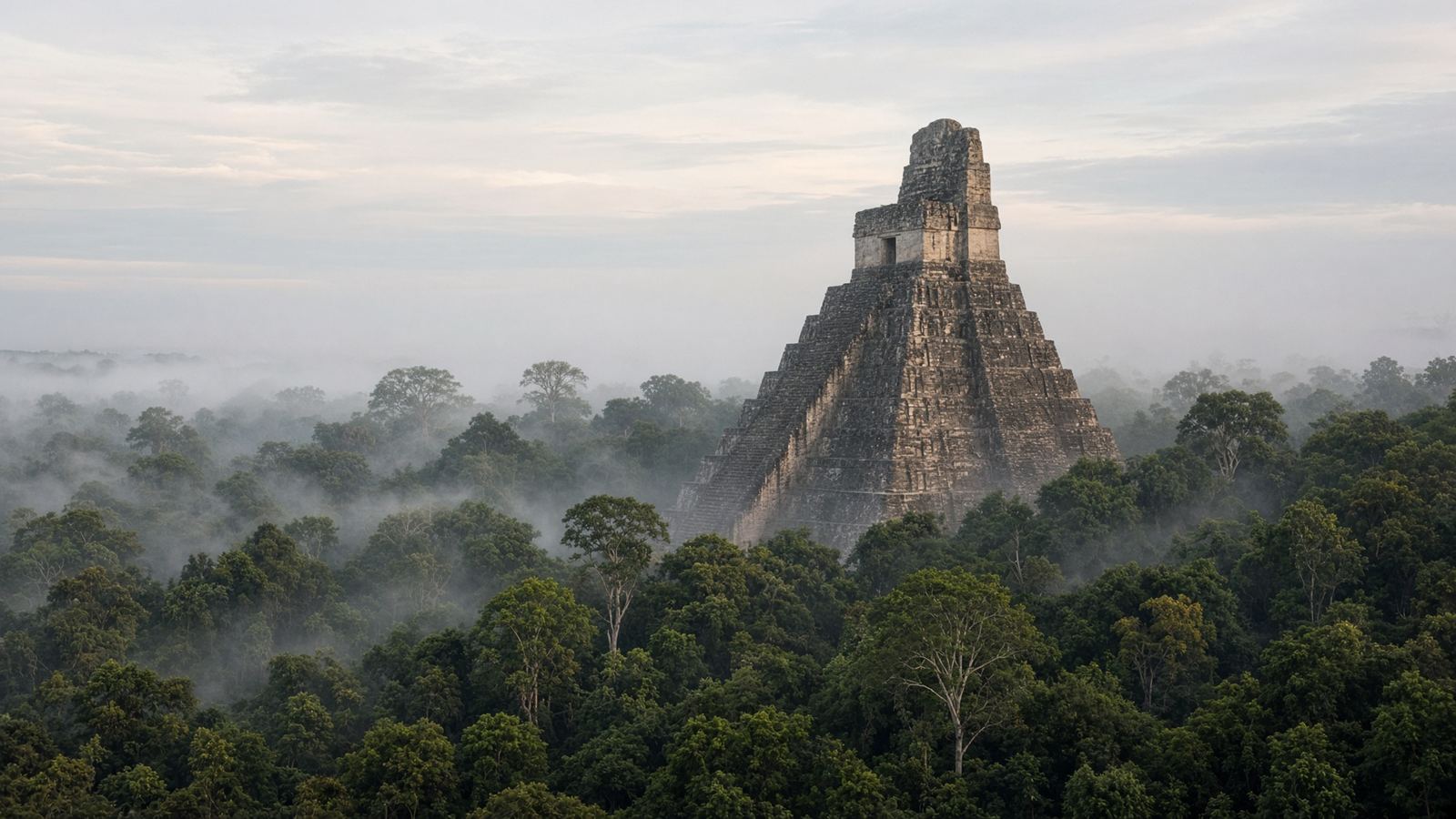
Tikal, Temple I — Temple of the Great Jaguar. Classic Maya, Petén. 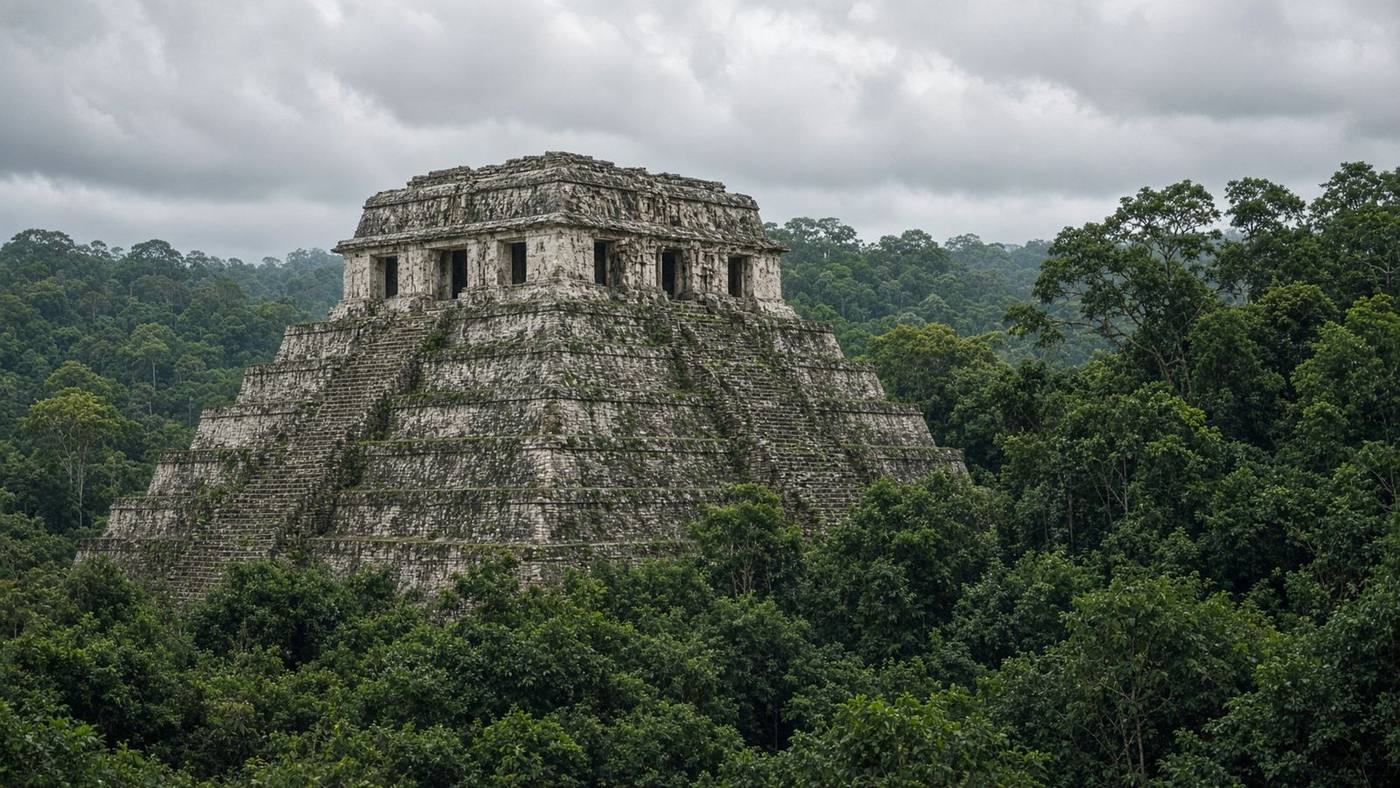
Palenque, Temple of the Inscriptions. Pakal’s house. The glyphs still speak. 3. Teotihuacan, then Toltec
Teotihuacan c. 100–550 CE · Tula / Tollan c. 900–1150 CE
The Mexica named Teotihuacan “the place where the gods were made.” Pyramid of the Sun, Pyramid of the Moon, Avenue of the Dead, Temple of the Feathered Serpent. After that city’s fall, Tollan (Tula) held the highland. Atlantean warriors. Ce-Acatl Topiltzin Quetzalcoatl. Mexica kings claimed Toltec blood. Tollan became the word for a true city.
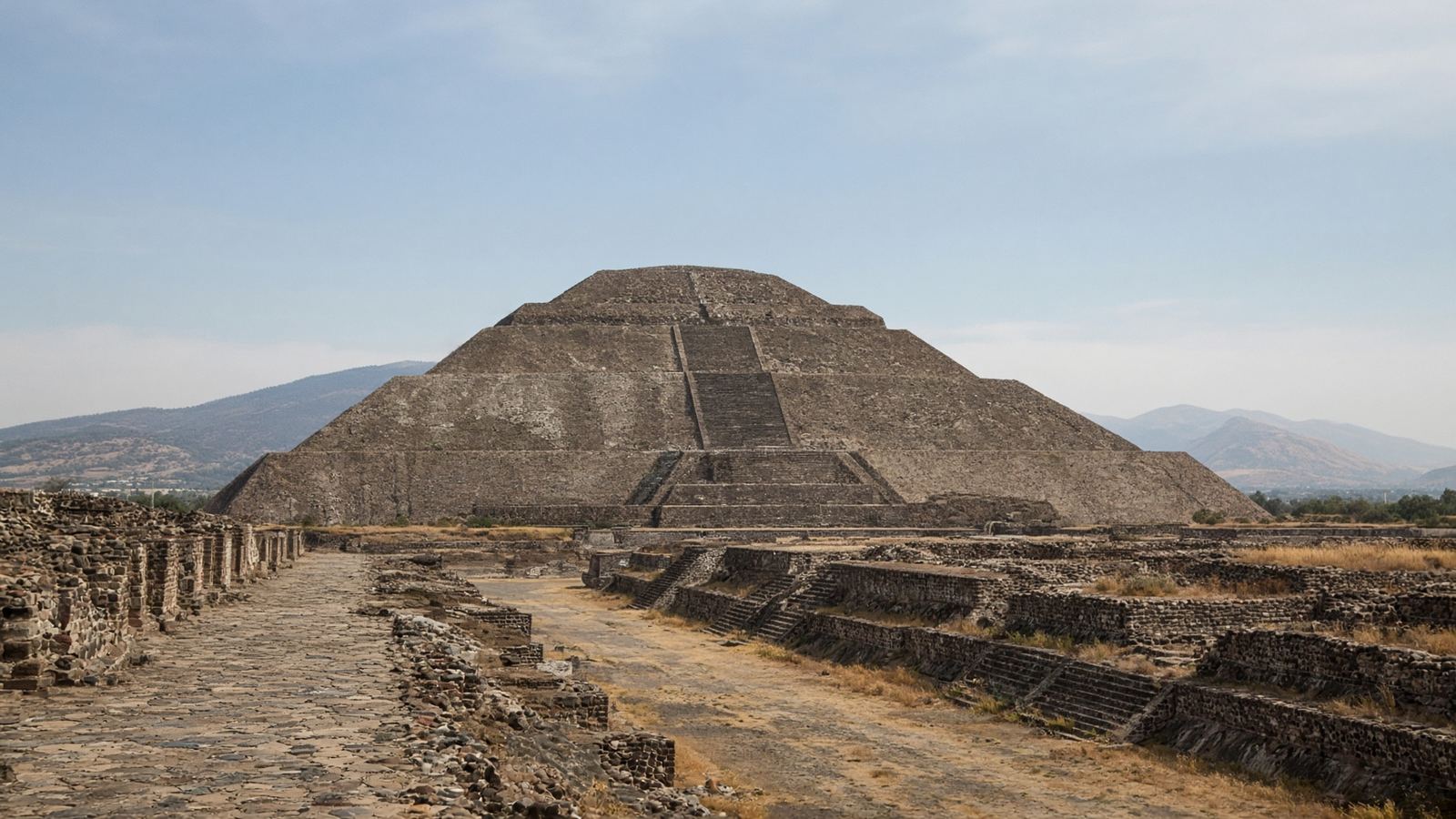
Teotihuacan, Pyramid of the Sun. Older than the Mexica. They walked it as a holy ruin. 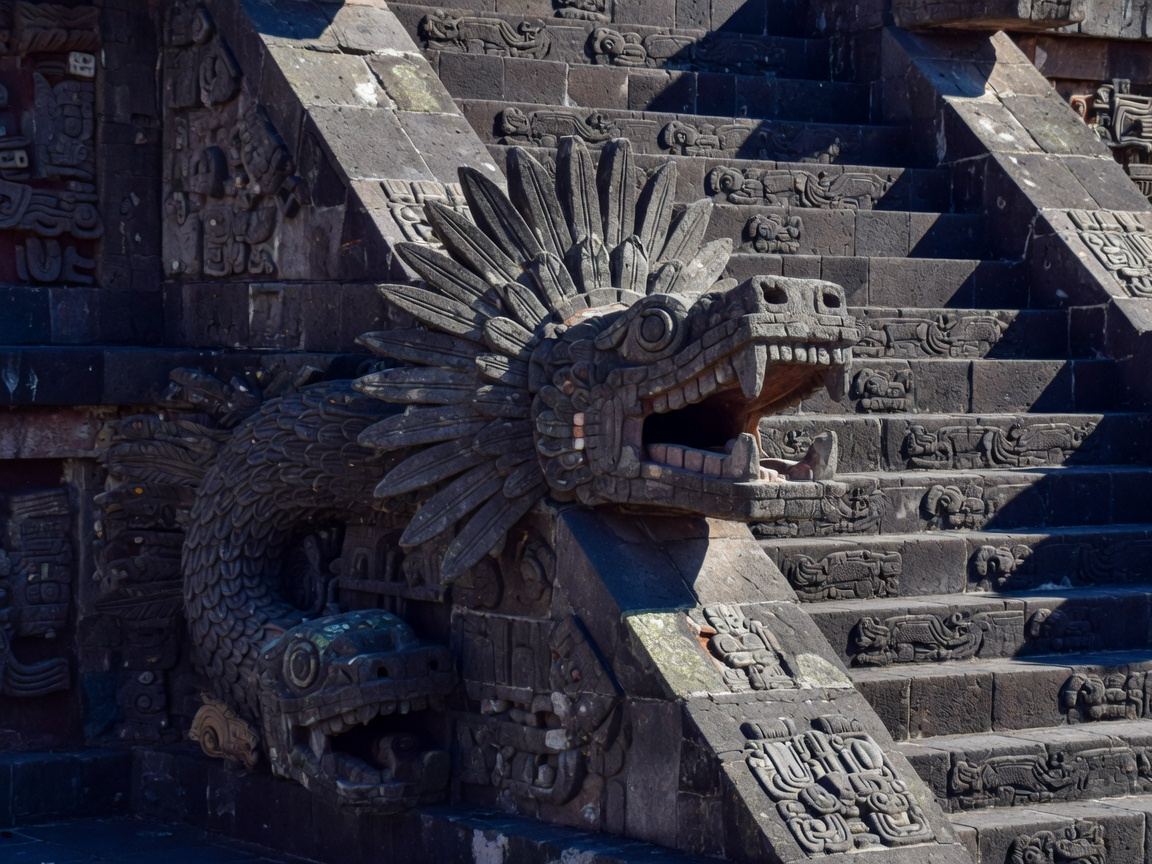
Feathered serpent on the stair. Teotihuacan / the highland temples. Kukulkán already in stone. 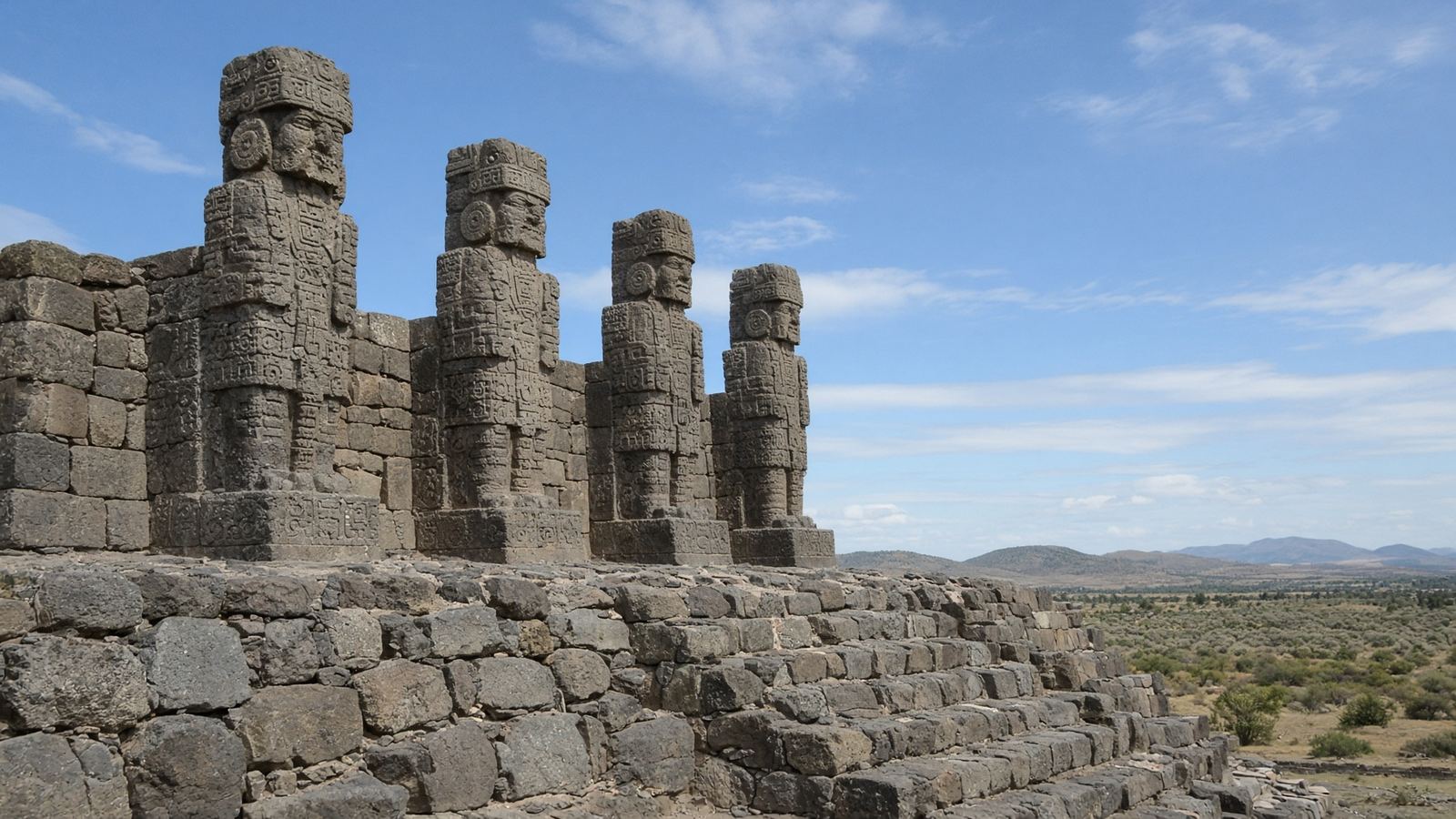
Tula. Four atlantean warriors. The Toltec house the Mexica claimed. 4. Mexica · Aztec
Tenochtitlan 1325 · Triple Alliance 1428 · fall 1521
Aztec is the later label, from Aztlan. In their mouths they were Mexica — people of Mexi, Huitzilopochtli. Mexico-Tenochtitlan on Lake Texcoco at the eagle on the nopal. Sister city Tlatelolco. Allies: Texcoco, Tlacopan. Templo Mayor: twin stairs, south to Huitzilopochtli (blue, sun, war), north to Tlaloc (water, rain). That is the last native capital of this hall.
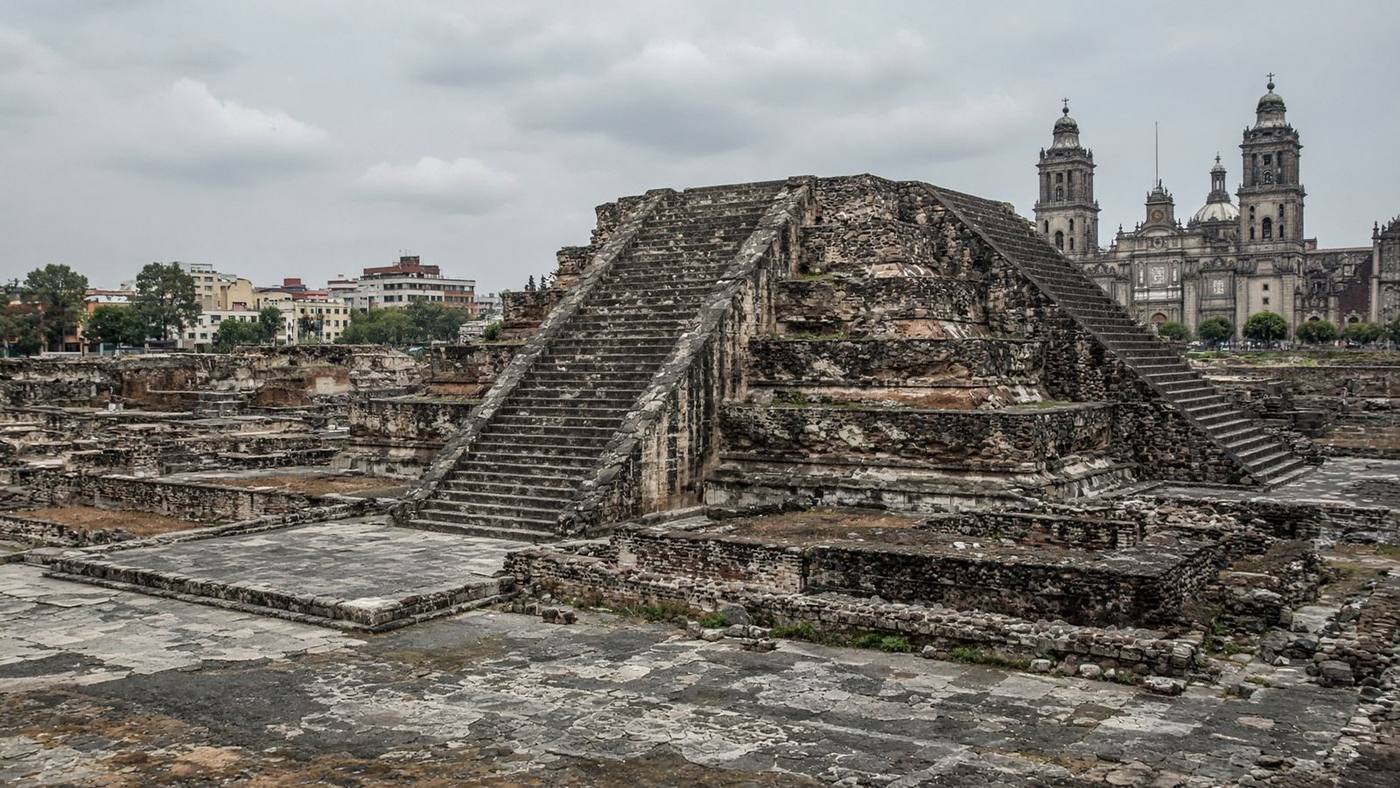
Templo Mayor today. Twin stairs of Huitzilopochtli and Tlaloc. 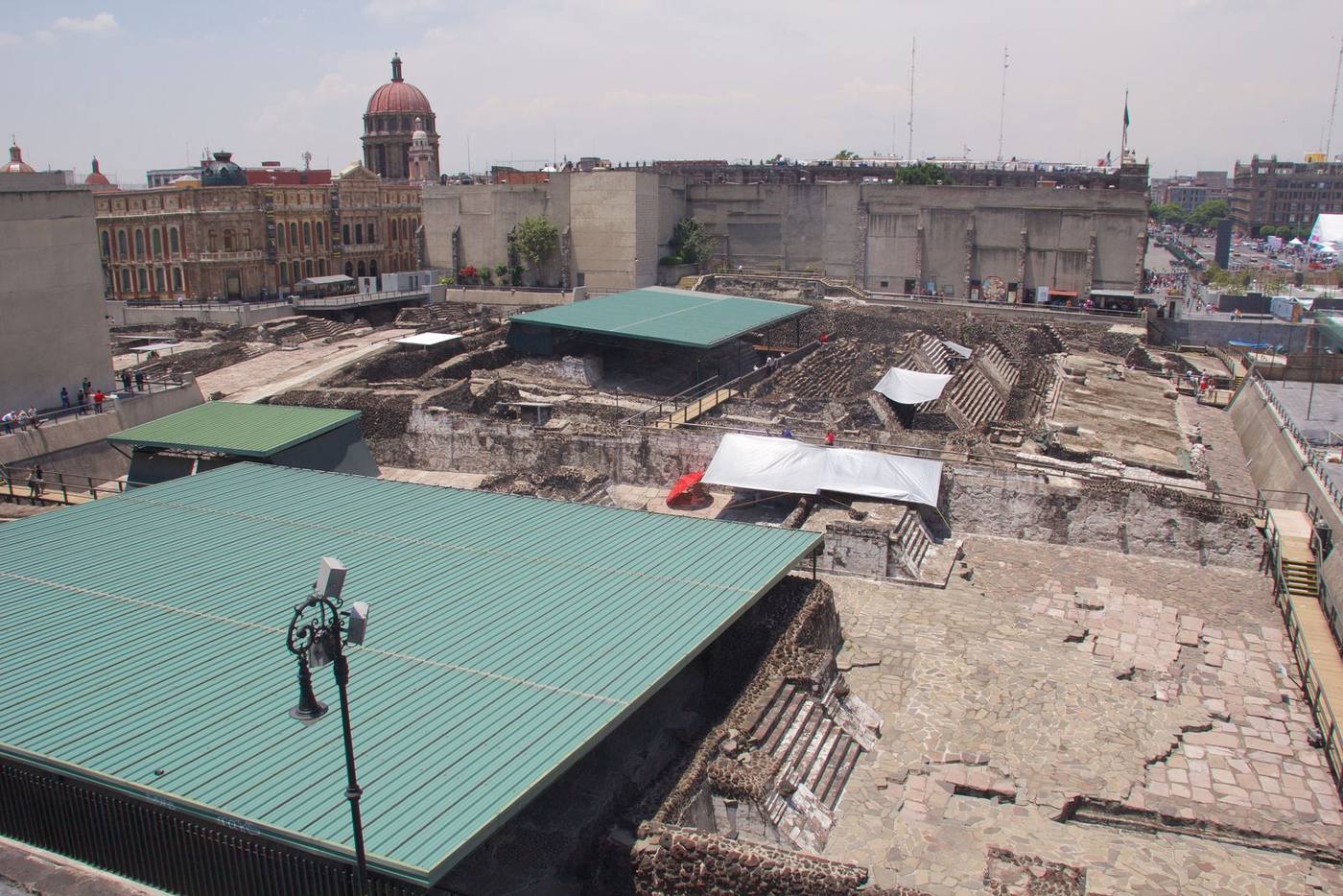
Templo Mayor. The excavated house. Seven layers under Mexico City. 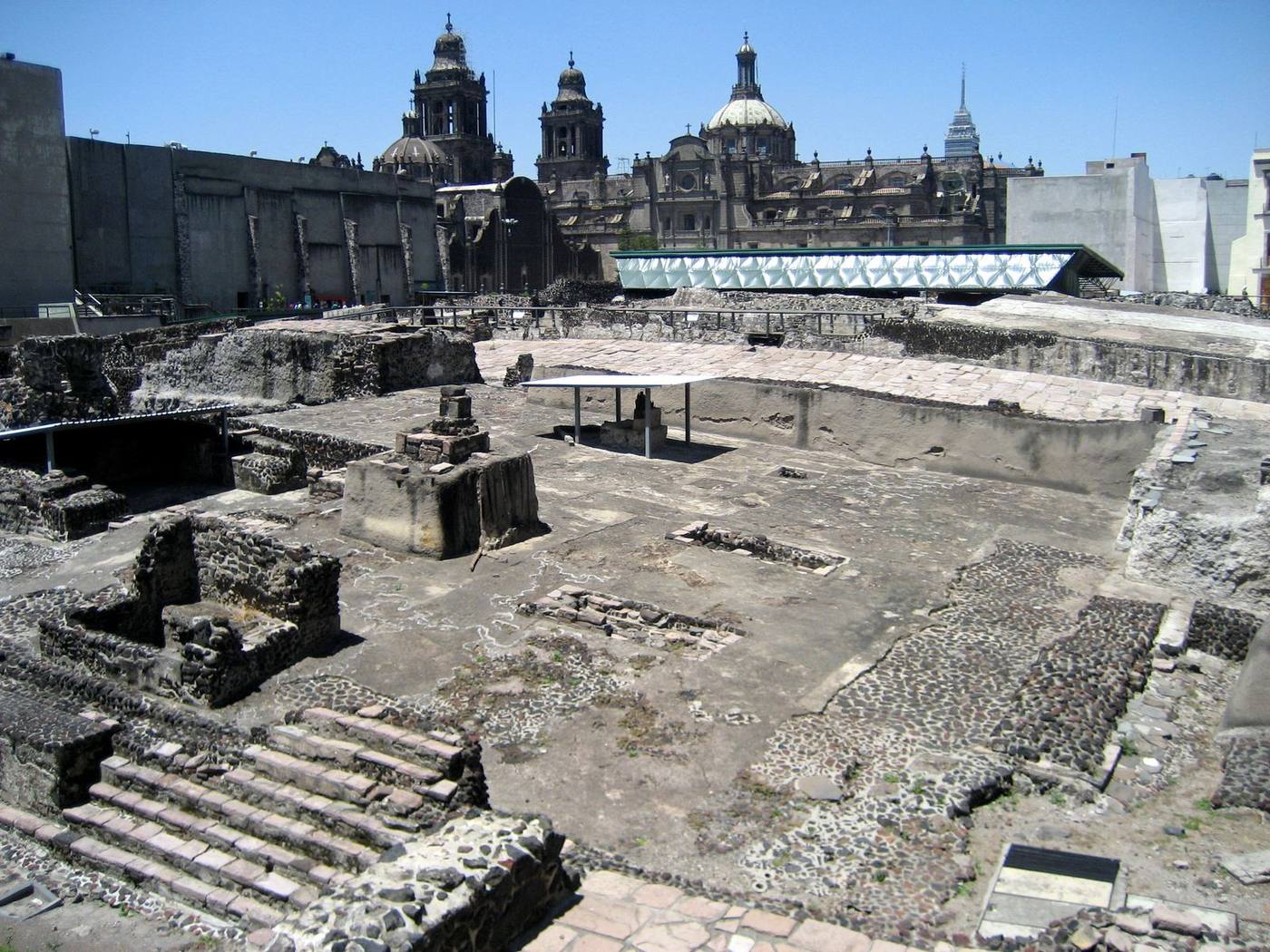
The precinct. South stair to Huitzilopochtli, north to Tlaloc.
The houses of the gods
Temples, facts
- Templo Mayor — rebuilt in seven major layers. 1978: the Coyolxauhqui stone found, and the temple opened again. South shrine: Huitzilopochtli, Coatepec restaged. North shrine: Tlaloc. A tzompantli of skulls at the base.
- Teotihuacan, Sun pyramid — one of the largest pyramids on earth. Talud-tablero. The Mexica climbed a city already dead and named it.
- Tikal Temple I — Jasaw Chan Kʼawiil I, ninth century. Roof comb over the jungle. Jaguar temple of the Classic Maya.
- Palenque, Temple of the Inscriptions — Kʼinich Janaabʼ Pakal buried in 683. The sarcophagus lid is not an astronaut. It is a Maya king at the world tree.
- El Castillo, Chichén Itzá — 91 steps × 4 sides + the top platform = 365. Nine terraces. At equinox the shadow of Kukulkán runs the north balustrade.
- Tula — four basalt atlanteans, 4.6 m, atlatl and butterfly pectoral. The knight the Mexica remembered as Toltec.
The southern bird
Why a clap comes back as a quetzal
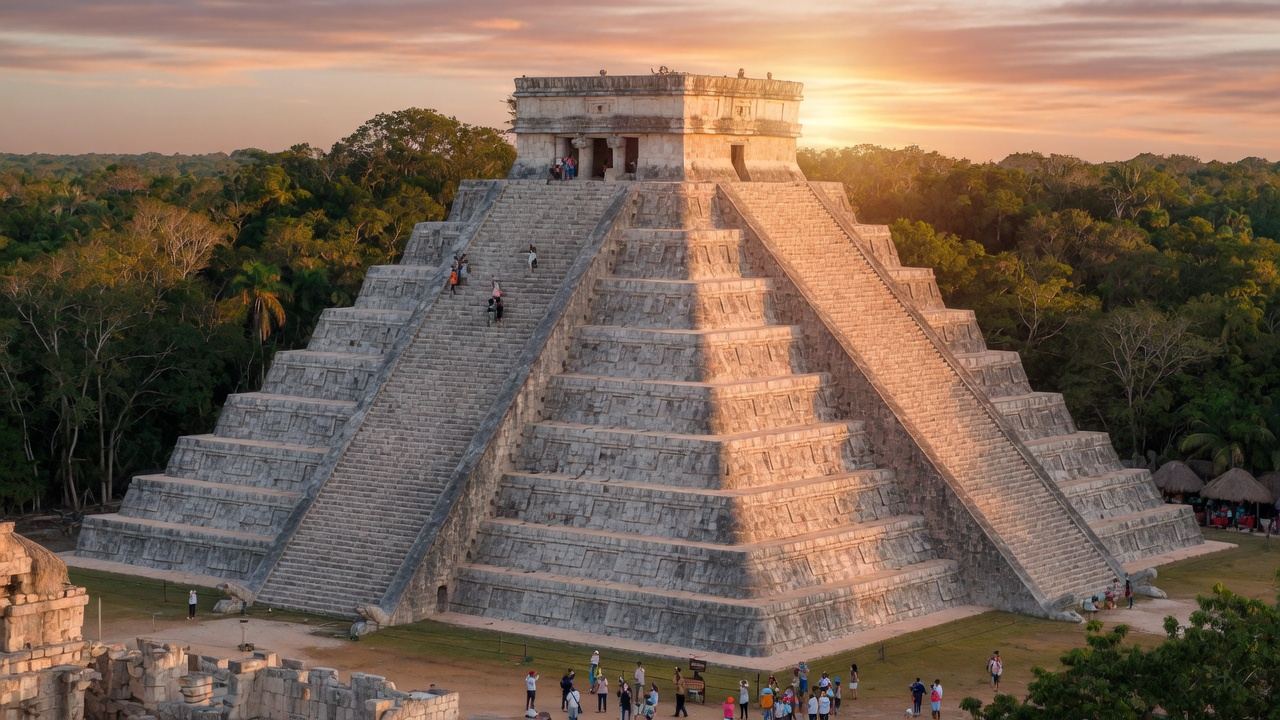
Stand at the base of the north stair of El Castillo and clap. The echo is not a flat slap. It chirps — a falling tone like the call of the resplendent quetzal, the southern bird whose feathers are the serpent’s plumage.
Why: each step is a stone tooth. The clap hits the staircase and scatters (diffracts) off every riser. Those little echoes arrive a hair later than each other, stacked into a chirp. Acousticians (Declercq and others) measured it. It is physics on Maya proportions, not a tourist trick. Nine terraces, the 365-count, and a stair that sings the bird of Kukulkán.
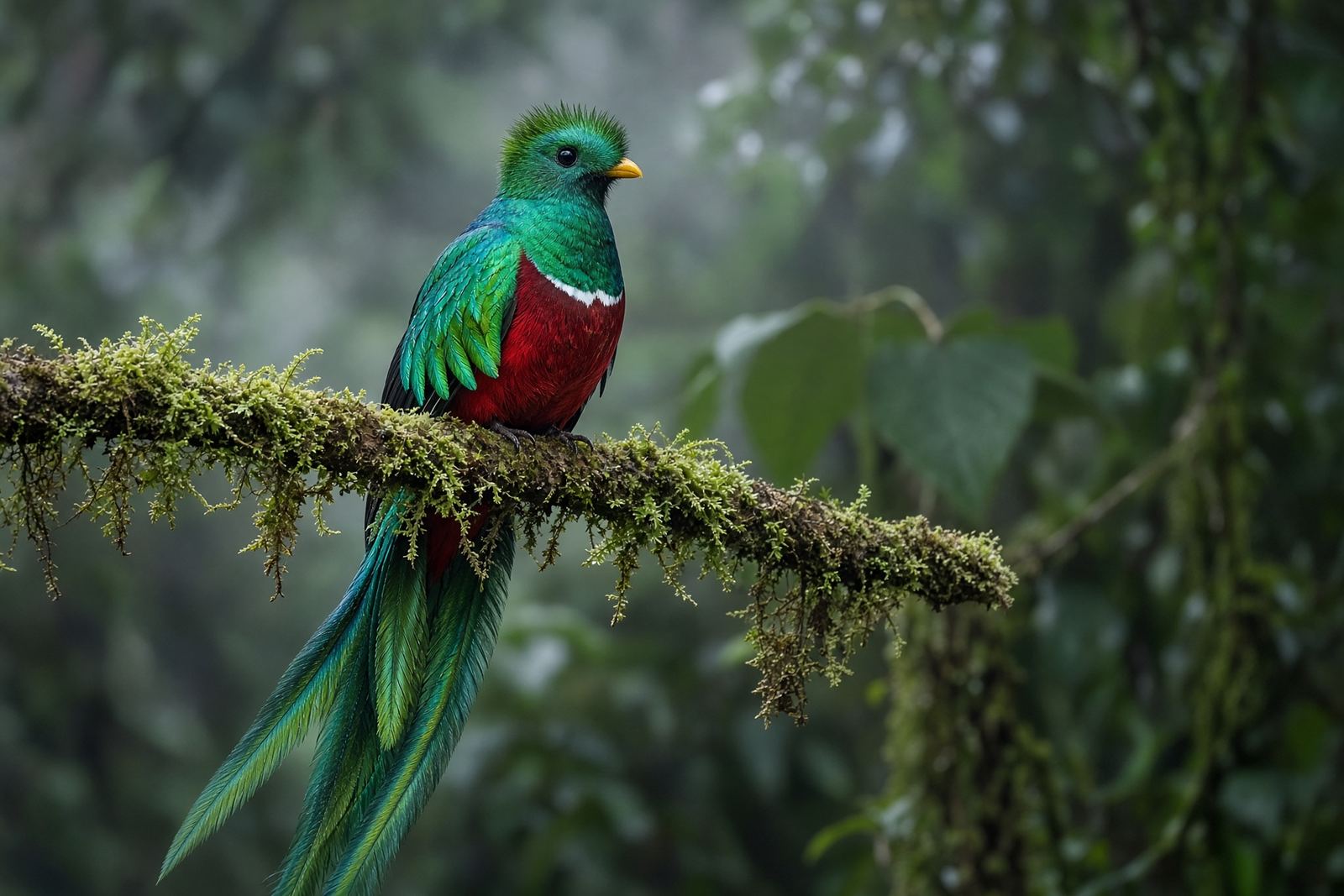
Kukulkán is the Maya feathered serpent. Quetzalcoatl is the Nahua one. Same current, two tongues. The Mexica took the serpent, the 260-day count, and the quetzal as the precious bird from that older lowland science. Shared maize, shared ballcourt, shared ollin.
The connection
Mexica cities sat in the high valley. Maya cities sat in the forest and the limestone plain. Between them: Teotihuacan, the Gulf, Toltec Tula, and Postclassic Yucatán. Feathered-serpent temples, talud-tablero, the 260-day engine, and quetzal feathers on tribute lists — that is the paper trail of learning, not a slogan. Olmec first. Maya the long writing. Toltec the highland model. Mexica the last empire of the valley.